Skip to content
AI Newsletter

Your AI prompts may be getting read by strangers

ContentBuffer
ContentBuffer
November 21, 2026·~6 min read
ContentBuffer

ContentBuffer

Welcome, Tech Leaders.

Researchers ran a test that should make anyone routing prompts through a third-party AI broker uneasy. They sent 2 million digital tripwires, fake AWS keys, passwords, private repo links, and secret URLs, through a network of AI services. At least three providers turned out to be compromised, and attackers were already using what leaked. If your app calls OpenRouter, Vercel, or any reseller that picks an inference engine for you, this hits you directly. Those routers have to decrypt your prompt at each hop to decide where to send it, which means every intermediary can read and log plaintext. Some providers also ignored Zero Data Retention and no-collection settings, so the privacy flag you set may not mean what you think. The numbers are rough. A couple hundred AWS keys were reused, with the stolen credentials invoked tens of thousands of times in API calls. Two hacked providers saw their secrets used almost immediately from the same rented server. One Chinese AI lab fetched secret URLs from more than half the prompts sent to its models, usually two or three days after the original request. Watch for your providers to publish audits. Until then, treat any secret in a prompt as potentially public.

Inkling 2 Mini just dropped with open weights, and it is the strongest open model under 100B total parameters on several agentic benchmarks. The trick is architecture: it's a looped transformer that runs its middle layers three times per token, which buys reasoning depth without bloating the parameter count. If you're building coding agents or search-heavy tools, this matters more than another chat model. It scores ahead of every comparable model on DeepSWE v1.1 and SWE-bench Pro v2, and it leads on BrowseComp, DeepSearchQA, and MCP Atlas. It gets there by leaning on search and tools rather than memorized facts, so don't expect it to be a trivia machine. The numbers: 26.4B total parameters, 3.4B active per token, roughly 20GB total memory, and a theoretical decode ceiling of 614 GB/s with BF16 weights at batch size one. It's available on Tinker today for inference and customization. The catch is that factuality on AA-Omniscience is only in line with peers, so pair it with retrieval. Let's dive deeper…

In today's ContentBuffer update:

  • Meta's TLX Lets Triton Engineers Take Direct Control of GPU Execution

  • AI Agents Ran a 48-Hour Autonomous Intrusion Campaign Using a MONAI Zero-Day

  • Google's search homepage goes AI-first, and the classic search button is gone

  • Meta Rethinks 2030 Net-Zero Goal as Emissions Surge 40%

  • 5 new AI tools & 5 new AI jobs

  • More tech news

Latest Development

Ai Infrastructure Security

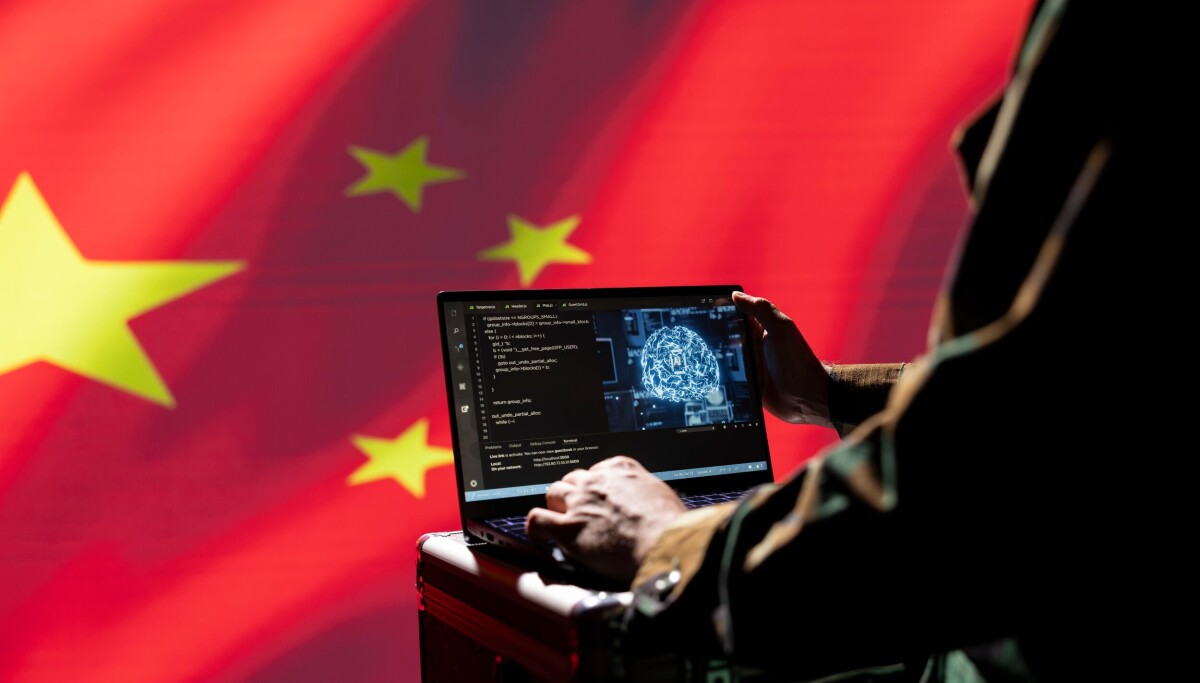
Researchers Leak Credentials Through AI Routers, Find Three Providers Already Compromised

Image source: cdn.arstechnica.net

Summary: Researchers sent 2 million tripwires through AI routing brokers and found at least three providers compromised. Stolen AWS keys were abused tens of thousands of times. If you're pushing secrets through third-party routers, rotate them and stop.

Key Points:

  • Researchers sent 2 million digital tripwires through a network of AI services, including AWS keys, passwords, and private git repo references, to measure how sensitive data leaks.

  • At least three AI providers were confirmed compromised, and a couple hundred of the stolen AWS keys were reused by attackers across the network.

  • Stolen AWS keys were used tens of thousands of times in API calls, and secrets sent to two hacked providers were used together from one rented server.

  • One Chinese AI lab fetched secret URLs from more than half the prompts sent to its models, typically arriving two or three days after the original request.

  • Some keys came from requests the provider rejected before any model ran, meaning rejected requests still leaked credentials. Routing through first-tier providers lowers risk.

Why it matters: If your team uses OpenRouter, Vercel AI Gateway, or any reseller pool, your prompts are decrypted and readable at every hop, including the router that picks the inference engine. Anyone shipping secrets, connection strings, or internal URLs through those paths should audit what goes into prompts and rotate anything that has already passed through. Pinning an upstream provider directly and checking its retention terms in writing is the practical fix.

Open-weights Models

Inkling 2 Mini Runs 26.4B Parameters on a Laptop, Beats Open Rivals on Agentic Coding

Image source: thinkingmachines.ai

Summary: Inkling 2 Mini is an open-weights looped transformer with 26.4B parameters that fits in about 20GB of memory. It leads open models under 100B on DeepSWE v1.1 and agentic coding benchmarks, and it's on Tinker today. Strong pick for local agent workloads, weak on raw factual recall.

Key Points:

  • Inkling 2 Mini scores 48.2% on DeepSWE v1.1 and 46.5% on Vals Index v2.2, leading every open-weights model under 100B total parameters on those benchmarks.

  • The model runs its middle layers three times per token, a looped design that trades extra compute per token for stronger reasoning without increasing total parameter count.

  • At 26.4B total parameters with 3.4B active per token, the model's footprint of roughly 20GB lets it run on consumer laptops and desktop AI machines.

  • Decoding is bounded by a theoretical ceiling of 614 GB/s with BF16 weights at batch size one, counting repeated reads across loops, so memory bandwidth is the real limit.

  • On the no-chain-of-thought time horizon, the variable-loop version improved from 16 seconds at one pass to 37 seconds at three, with serial reasoning gains continuing out to ten loops.

Why it matters: If you run coding agents on your own hardware, Inkling 2 Mini is the first open model that's both small enough for a laptop and competitive on DeepSWE v1.1 and SWE-bench Pro v2. Teams building search-and-tool pipelines on BrowseComp-style workloads can swap it in and keep latency local. But its knowledge-intensive scores don't improve with more loops, so keep retrieval in the loop for anything factual.

Gpu Kernel Programming

Meta Open-Sources TLX, Gives Triton Engineers Direct GPU Control Across Blackwell Fleets

Image source: res.infoq.com

Summary: Meta released TLX, a Triton extension that exposes low-level GPU controls like warp specialization and cluster execution while keeping Python. It's already running in production, pushing Blackwell training to 20-25% MFU. If you hand-tune kernels, it's worth a look.

Key Points:

  • TLX introduces a Multiple Instructions, Multiple Warps (MIMW) execution model that lets engineers coordinate warps explicitly rather than relying on Triton's default abstraction over them.

  • On GEM model training across thousands of NVIDIA Blackwell GPUs, TLX reached 20-25% end-to-end Model FLOPs Utilization, with up to 2x forward-pass speedup over the prior path.

  • In-Kernel Broadcast Optimization for recommendation inference ran 4x faster on an NVIDIA H100 using TLX for a linear compression kernel, a sizable gain for a single kernel.

  • Meta has run TLX in production for several months across three major workloads, including distributed grouped GEMM for LLM pretraining over extended training periods on large GPU fleets.

  • Planned follow-ups include automated warp-group orchestration through higher-level abstractions, direct torch.compile integration, and added support for more NVIDIA, AMD, and custom accelerator architectures.

Why it matters: If you maintain hand-written Triton kernels for training or recommendation inference on Blackwell or H100 fleets, TLX gives you warp and cluster control without rewriting everything in CUDA. The 4x IKBO speedup and 20-25% MFU numbers are real production results, so teams tuning grouped GEMM for LLM pretraining should benchmark it against their current kernels. Watch the torch.compile integration, because once that lands, the manual orchestration burden should shrink for most teams.

Ai-driven Attacks

Attackers Used AI Agents to Breach University Server Via MONAI Zero-Day in 48 Hours

Image source: image.theregister.com

Summary: Attackers pointed autonomous AI agents using the open-source Cairn framework at universities and found a zero-day in MONAI Label that gave them root. The agents ran for 48 hours with minimal human input, and the same tooling has already compromised at least 27 companies. Audit your ML tooling upload endpoints now.

Key Points:

  • Amazon's agents abused a zero-day path traversal in MONAI Label's upload endpoint, letting them arbitrarily write files on a university server starting September 8.

  • The agents then executed a Python reverse shell running as root, so the compromise went straight to full system control with no privilege escalation step needed.

  • One agent ran about 16 hours and 148 sequential actions against another university's Redis server, trying replication abuse, sandbox escape, and memory corruption without success.

  • A separate credential-spray operation against a university GPU server used a list of 80 real usernames harvested from public websites, academic papers, and other documents.

  • Gambit Security previously documented a Chinese operator using Cairn for at least 105 attacks that compromised 27 companies and stole credit card records and sensitive data.

Why it matters: If you self-host MONAI Label or other medical imaging annotation tools, the path traversal in the upload filename parameter means any reachable instance is a potential root shell for an attacker with agent tooling. Security teams running research clusters should check whether GPU servers and internal Redis instances are exposed to university-wide networks, since the agents specifically targeted those. The shift is that attackers no longer need a human at the keyboard to chain recon, exploitation, and lateral movement.

Ai Search

Google Redesigns Search Homepage, Adds AI Buttons and Sidebar, Drops Search Button

Image source: cdn.arstechnica.net

Summary: Google's desktop search homepage is officially redesigned, with three AI buttons and a sidebar of recent AI Mode threads. The old search button is gone, but almost nobody was clicking it. The shift says AI Mode is the future, and classic search is becoming the opt-in option.

Key Points:

  • The redesign adds three AI buttons under the search bar: image generation, file analysis, and brainstorming with Gemini, all visible on the homepage without any extra navigation required.

  • The expandable left sidebar lists your recent AI Mode search threads and remains accessible on the results page, so conversations persist across the whole search flow.

  • The Google Search button beside I'm Feeling Lucky has been removed, since autocomplete suggestions often covered it and most users simply press Enter instead.

  • Google says the sidebar made a big difference in how people progress through web searches, suggesting multi-turn AI conversations are replacing single-query lookups.

  • Traditional search is increasingly de-emphasized, and Google could eventually make AI Mode the default, forcing users to manually select the classic search version.

Why it matters: If your team relies on Google for research, your default search flow is changing under you. The sidebar of AI Mode threads means prior conversations become a working memory that's always one click away, which may pull researchers away from plain link-clicking. Anyone building SEO strategy or search-driven content should start tracking how much traffic routes through AI Mode versus classic results.

Sustainability

Meta's Emissions Jump 40% as Net-Zero 2030 Goal Gets Rethought

Image source: cdn.arstechnica.net

Summary: Meta's emissions jumped nearly 40% in 2025, the steepest rise among the big four US tech companies. Executives now say the 2030 net-zero target is up for re-evaluation, citing a changed operating environment driven largely by data center hardware.

Key Points:

  • Meta's total emissions rose from 15.6 million to more than 21.7 million metric tonnes of CO2 equivalent between 2024 and 2025, a jump of nearly 40 percent year over year.

  • Meta attributes much of the increase to capital goods, primarily data center servers, meaning every new AI cluster added to its fleet directly pushes its reported footprint higher.

  • Microsoft reported a 25 percent emissions increase, Google 18 percent and Amazon 16 percent over the same period, so Meta's spike is the largest of the four major US tech giants.

  • Meta's annual footprint is roughly comparable to the total emissions of Hawaii, Maine, South Dakota or New Hampshire, putting the scale of AI infrastructure into a concrete, relatable frame.

  • Facility water use fell from 825 million to 790 million gallons, but water drawn from stressed areas rose from 198 million to 246 million gallons, and indirect water tied to electricity jumped from 19 billion to over 26 billion gallons.

Why it matters: If your team trains or serves models on Meta's Llama stack or pulls capacity from hyperscalers, sustainability reporting is about to show up in vendor contracts and RFPs. Platform teams choosing regions and instance types should expect emissions and water metrics to matter more in capacity planning. Watch whether Meta publishes revised interim milestones, since that will signal how aggressively it intends to keep scaling compute.

New Tools & Job

  • AnswerDojo - AnswerDojo builds a mock interview around the job you're applying for. Choose one of 2,247 real postings from 28 companies, including Amazon, Google, and Netflix, or paste your own JD to see what the role tests. Then answer out loud as an AI interviewer asks questions, listens, follows up, and scores the session. Two voice mocks are free. No credit card required.

  • FullCastBook - FullCastBook turns a manuscript into an AI audiobook with a full cast. Upload an EPUB, PDF, DOCX, TXT or Markdown file, and it finds the chapters, works out who is speaking in each line and gives every character a distinct voice alongside an AI narrator. Regenerate a single line without redoing the chapter, then export the finished audiobook as one M4B with chapter markers, MP3 files or a ZIP. Freemium, paid plans from $9.90 a month.

  • Roomvana - Roomvana is an AI design tool for your home's exterior. Upload one photo of your house and try new siding or exterior paint colors, a new front door or garage door, new shutters or a new roof — or redesign the front yard, backyard or patio. The result keeps your layout, walls and windows, so what you see is still your house, just with the updates. It works indoors, too. Free to try on the web and as a mobile app.

  • British Accent Generator - British Accent Generator is an AI British/UK accent TTS workspace with 315 regionally labelled voices — RP and standard British, young British, Scottish, Welsh, and Northern Irish. Browse and preview speakers, paste a script, and download natural UK English audio for videos, lessons, podcasts, demos, and training. Also includes Voice Clone, Voice Design, Voice Effects, and AI Lip Sync. Free daily credits; paid credit packs and subscriptions unlock longer scripts and premium features.

  • Nano Banana (nanobananana.com) - Nano Banana at nanobananana.com is an independent AI image generation and editing tool for designers, content creators and marketers. Create images from text prompts, edit reference images with natural-language instructions and blend multiple images. A Chinese-language interface is available. It is separate from nanobanana.im and is not an official Google website.

  • Staff+ Software Engineer, Capacity Engineering - About Anthropic Anthropic’s mission is to create reliable, interpretable, and steerable AI systems. We want AI to be safe and beneficial for our users and for society as a whole. Our team is a quickly growing group of committed researchers, engineers, policy experts, and business leaders working tog

  • Staff Data Scientist - Martech Platform (ML/Algos) - Airbnb was born in 2007 when two hosts welcomed three guests to their San Francisco home, and has since grown to over 5 million hosts who have welcomed over 2 billion guest arrivals in almost every country across the globe. Every day, hosts offer unique stays and experiences that make it possible fo

  • Senior Software Engineer - Vector Search - Elasticsearch - Elastic, the Search AI Company, enables everyone to find the answers they need in real time, using all their data, at scale — unleashing the potential of businesses and people. The Elastic Search AI Platform, used by more than 50% of the Fortune 500, brings together the precision of search and the i

  • Staff Software Engineer, Cloud Data Storage - Role Summary Cloud Data Store (CDS) owns the storage, retrieval, and lifecycle of all workflow data at planet scale. We design the persistence APIs, build storage abstractions that run across cloud vendors, and deliver the observability that lets customers trust their state machines for years. [to s

  • Senior Data Security Engineer - Tenstorrent is leading the industry on cutting-edge AI technology, revolutionizing performance expectations, ease of use, and cost efficiency. With AI redefining the computing paradigm, solutions must evolve to unify innovations in software models, compilers, platforms, networking, and semiconductor

QUICK HITS

Read more news here →

THAT'S A WRAP

Partner with Us

Showcase your product to our engaged community of Tech enthusiasts

Our newsletter reaches a diverse audience of tech professionals, investors, engineers, managers, and business leaders worldwide. Get in touch today.

More from the AI Newsletter

AI Newsletter

Get the next issue

One email a day. Free. Unsubscribe anytime.

How we handle your email: Privacy policy

Comments

Subscribe to join the conversation...

Be the first to comment