Skip to content
AI Newsletter

Your AI prompts may be read by strangers

In this issue

This issue was put together automatically: each item is summarised by AI from the linked source. How we make this.

From the ContentBuffer AI newsletter

ContentBuffer
ContentBuffer
November 23, 2026·~6 min read
ContentBuffer

ContentBuffer

Welcome, Tech Leaders.

Prompts you send to AI models may not stay between you and the provider. Researchers seeded nearly two million prompts with unique, trackable secrets and followed them. At least three AI providers were compromised, and prompts sent to U.S.-based providers were passed on to Chinese AI organizations. AI routers give you one API endpoint that forwards requests to a pool of models. Every hop along that path can see your full prompt and response. Some routers are open marketplaces where the cheapest seller wins your request. If your team sends source code, credentials, or customer data through a gateway to save money, resellers you've never heard of may read it. The largest breach involved a couple hundred AWS keys stolen in late October, used for tens of thousands of API calls. Some stolen requests were marked Zero Data Retention, so privacy settings were ignored. One seeded link surfaced months later in an internal company chat in China. Whether providers publish audits, and whether router marketplaces face real accountability, is still open.

Nvidia's Hyperion computing platform just became the default bet for European autonomous driving. Volkswagen, Volvo, Mercedes-Benz, Einride, Bolt and TIER IV are all building on it, spanning passenger cars, robotaxis, freight trucks and public transit. If you're on an AV or ADAS team, this matters because the stack is consolidating. Hyperion pairs with Alpamayo reasoning models and Cosmos synthetic data tools, which means fewer homegrown pipelines and more shared assumptions about perception and motion planning. Nvidia also introduced Halos SAFE, a framework for producing measurable safety evidence through simulation, lab tests, on-road evaluation and fleet monitoring. The numbers: Bolt wants to start real-world data collection in Madrid in 2027, initially targeting Germany, with a longer-term goal of at least 25,000 Level 4-capable vehicles in Europe. Mercedes expects its MB.DRIVE ASSIST PRO urban point-to-point feature to get German approval. Nvidia also expanded with Uber on an AV data initiative. Watch the regulatory timelines. Most of these dates depend on approvals that haven't happened yet. Let's dive deeper…

In today's ContentBuffer update:

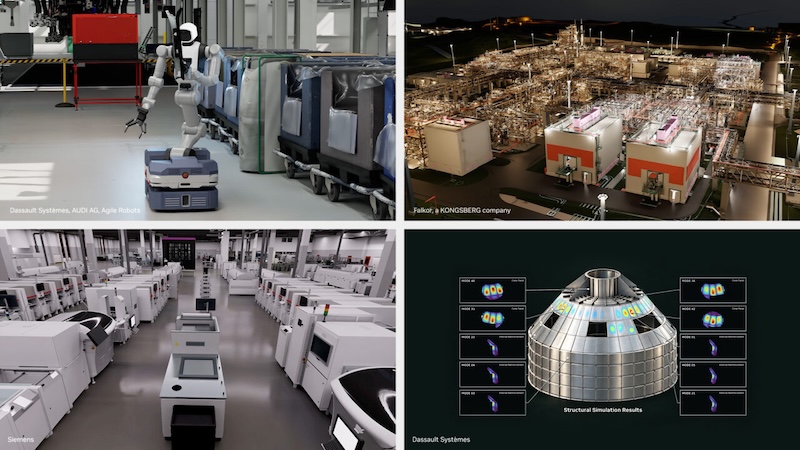
  • European Manufacturers Bet Big on AI Agents and Digital Twins at GTC Berlin

  • Binding of Isaac: Repentance Plus Pulled Undisclosed AI Music After Reddit Found Suno Metadata

  • OpenAI's Internal Perplexity Tracking Could Become the Industry's Safety Yardstick

  • Mitsubishi Electric Commits $2.9B to US Manufacturing, Cybersecurity and AI

  • 5 new AI tools & 5 new AI jobs

  • More tech news

Latest Development

Ai Data Privacy

Researchers Trace 2M Test Prompts to Shady AI Routers, Some Reaching China

Image source: dragos.brightspotcdn.com

Summary: Researchers planted nearly two million trackable secret prompts with AI providers and found leaks at at least three, including transfers to Chinese organizations. Resellers on router marketplaces could read and retain prompts, even ones marked Zero Data Retention. If your AI traffic passes through third-party gateways, check who sits in the chain.

Key Points:

  • Researchers sent nearly two million AI prompts containing unique, trackable secrets, and at least three providers were found compromised as a result of the test.

  • Some stolen AWS requests were marked Zero Data Retention, yet the attacker still used a couple hundred stolen keys for tens of thousands of API calls.

  • The attacker added ARTEX, an LLM-driven penetration testing framework, on November 1, using user agents artex-agent and artex-judge-r121 that appear on no public indicator list.

  • One seeded URL was accessed months after a single inference request, and one link ultimately appeared in an internal company chat in China.

  • Prompts sent to U.S.-based providers were transmitted to Chinese AI organizations, despite published policies and customer privacy settings that providers failed to honor.

Why it matters: If your team sends prompts through a multi-provider router to cut inference costs, you are trusting every reseller in that chain with your source code and credentials. Platform and security teams should audit which gateways handle production traffic and whether they filter out open marketplace sellers. Engineers who paste internal code or customer data into AI tools should assume it can be retained and read unless the path is verified end to end.

Autonomous Vehicles

Europe's Automakers Pile Onto Nvidia Hyperion for Autonomous Driving Push

Image source: roboticsandautomationnews.com

Summary: Bolt, Volvo, Mercedes-Benz, VW and Einride are all standardizing on Nvidia's Hyperion for autonomous driving in Europe. Nvidia also launched Halos SAFE, a safety evidence framework, and Alpamayo 2 Edge for in-vehicle reasoning. Expect the AV stack to converge fast.

Key Points:

  • Bolt plans to start collecting real-world driving data in Madrid in 2027, pending regulatory approval, with Germany as its first commercial market.

  • Bolt's longer-term European target is a fleet of at least 25,000 Level 4-capable vehicles, a number that would make it a serious robotaxi operator.

  • Mercedes-Benz expects its MB.DRIVE ASSIST PRO system to receive German approval for urban point-to-point driver assistance, extending its Nvidia collaboration to Level 3 and Level 4.

  • Nvidia's new Halos SAFE framework combines simulation, laboratory testing, on-road evaluation and fleet monitoring to produce measurable evidence of autonomous system safety.

  • Nvidia also released Alpamayo 2 Edge, an AI reasoning model for in-vehicle perception and motion planning, alongside new tools for synthetic driving data generation.

Why it matters: If your team builds perception or planning stacks, Hyperion plus Alpamayo 2 Edge is now the reference architecture your OEM partners will ask about. Halos SAFE gives safety engineers a concrete evidence pipeline to map against homologation requirements, which could cut months from validation work. The Bolt and Einride timelines also signal that freight and robotaxi fleets will generate real-world data sets that smaller teams will need to plan around.

Industrial-ai

Nvidia GTC Berlin: Siemens Cuts Inspection Calibration Time by 40 Percent

Image source: roboticsandautomationnews.com

Summary: Siemens, Mercedes-Benz, Audi and imec are using Nvidia's GPU simulation and digital twin stack to cut engineering and inspection time. Siemens reports 40 percent faster inspection calibration and imec sees up to 40x lithography speedups. Nvidia's new FOX framework gives developers an early-access path to building factory AI agents.

Key Points:

  • Siemens reports a 40 percent reduction in inspection calibration time after using Nvidia Cosmos Data Factory to generate synthetic circuit-board defect images for training.

  • Siemens estimates potential cost savings of 20 percent from deploying FOX-built agents inside its Intelligence Center X platform for factory management tasks.

  • imec reports up to 40x speed improvements on lithography simulations running on Nvidia GPUs, a figure that changes how fast chip process engineers can iterate on designs.

  • Infineon reports 12x faster performance on certain semiconductor device simulations, letting engineering teams test device behavior before committing to physical fabrication runs.

  • Mercedes-Benz runs Siemens Simcenter STAR-CCM+ on Nvidia GPUs to accelerate aerodynamic simulations during vehicle development, alongside AI-based windshield assembly verification on its production lines.

Why it matters: If you're building plant-floor software or industrial agents, Nvidia's FOX framework is now in early access and gives you a reference architecture that Siemens is already deploying. Teams running simulation-heavy engineering, like semiconductor process work at imec or Infineon, should benchmark whether GPU-accelerated solvers justify the hardware shift. The synthetic data pipeline Siemens used for circuit-board inspection is a practical template for any computer vision team blocked by scarce defect samples.

Generative-audio

Binding of Isaac: Repentance Plus Ships With Undisclosed AI-Generated Music

Image source: platform.theverge.com

Summary: Binding of Isaac: Repentance Plus shipped with AI-generated music in one section, found by a Reddit user via Suno metadata. Developer Nicalis never disclosed it, and the files were pulled, but Steam reviews remain overwhelmingly negative. Any team outsourcing audio should audit its asset provenance now.

Key Points:

  • The AI-generated music appeared in a Grand Theft Auto-themed section of Binding of Isaac: Repentance Plus, not across the whole game, which limited the scope of the controversy.

  • Reddit user ShweetsStuff identified the tracks by spotting Suno metadata embedded in the audio files, which pointed directly back to listings on Suno's website.

  • Creator Edmund McMillen publicly apologized and said he had no knowledge the music was AI-generated, despite having previously called AI in games "uninspired and bland."

  • Nicalis, Inc., the publisher, did not disclose the use of AI music during development, and the generated files were removed in a later update to the game.

  • Steam reviews remain overwhelmingly negative and have not recovered to a positive rating, while Xbox reviews are noticeably more positive as players gave the creator the benefit of the doubt.

Why it matters: If you manage audio for a game or any media product, this is a provenance problem you can't ignore. Metadata in exported files can expose where a track came from, and Suno tracks carry identifiable tags that reviewers can trace in minutes. Studios should require contractors and internal teams to declare any generative tools in writing before assets enter the build.

Ai Safety And Evaluation

OpenAI Tracks Perplexity Internally, Proposes Shared Compression Metric for Safety Limits

Image source: images.ctfassets.net

Summary: OpenAI wants the industry to share perplexity measurements and agree on safety limits built on them. GPT-4 sat near log-perplexity 0.91, with new capabilities emerging around 0.8. Expect this to shape future model gating.

Key Points:

  • GPT-4's log-perplexity was roughly 0.91, according to the measurements OpenAI discusses, giving a concrete baseline for comparing future frontier models against one another.

  • Transformative capabilities in cybersecurity and mathematics reportedly began emerging at a log-perplexity of about 0.8, which makes that threshold a plausible candidate for early safety review.

  • OpenAI identifies the 0.68-0.7 log-perplexity window as the next zone where further transformative capabilities are expected, so labs may want limits set before reaching it.

  • GPT-2, GPT-3, GPT-3.5 and GPT-4 each marked a distinct capability step, from coherent paragraphs to in-context learning to chain-of-thought reasoning productively.

  • Perplexity has real limits as a shared metric: it doesn't map to specific tasks, comparisons across labs are hard, and the true floor of the metric remains unknown.

Why it matters: If you're shipping products on top of frontier APIs, a shared perplexity-based threshold could eventually determine which model tiers get released and how fast. Teams running internal evals should start tracking log-perplexity alongside their task benchmarks so they can read these numbers when labs publish them. Safety and compliance leads should watch whether the proposed limits become industry standards, since that could add review gates before new model versions reach production.

Data Center Infrastructure

Mitsubishi Electric Pours $2.9B Into US Manufacturing and AI Push

Image source: roboticsandautomationnews.com

Summary: Mitsubishi Electric has poured over $2.9 billion into US manufacturing, energy software and cybersecurity over two years. Its $1 billion Nozomi Networks buy and new Ohio cooling expansion signal serious bets on data center infrastructure. Watch for supply-chain shifts if you buy switchgear or HVAC gear.

Key Points:

  • Mitsubishi Electric has invested $259.5 million in manufacturing facilities across Kentucky, Pennsylvania and Ohio, supporting the creation of over 400 manufacturing jobs in those states.

  • The $86 million advanced switchgear and power electronics plant in Pennsylvania was announced in October 2024, giving US grid and industrial buyers a domestic source for critical electrical equipment.

  • A $143.5 million heat-pump compressor facility in Kentucky was announced in December 2024, adding US capacity for compressors used across building HVAC and data center climate systems.

  • The company completed its acquisition of industrial cybersecurity specialist Nozomi Networks in a transaction valued at approximately $1 billion, strengthening protection for operational technology environments.

  • Mitsubishi Electric opened its first Western digital transformation and AI innovation hub in Boston in June 2026, and has disclosed more than $2.66 billion in investment commitments and transaction values overall.

Why it matters: If you're sourcing switchgear or cooling gear for data center builds, the new Pennsylvania and Ohio plants give procurement teams a domestic alternative to import-heavy supply chains. Platform and security teams running industrial control systems now have a vendor that owns Nozomi's OT threat detection tooling outright. The PCI Energy Solutions deal, once closed, will push the company further into energy software for grid operators.

New Tools & Job

  • VectorMint - VectorMint is an AI SVG generator that transforms text descriptions or uploaded images into editable vector files. Users can preview artwork, adjust colors, compare color and outline views, and export standard SVG files. The tool supports multiple styles including illustrations, icons, logos, and line art, with one free preview available before requiring a paid plan.

  • PavoAI - Pavo AI lets you create videos up to 15 seconds using Seedance 2.0 or Wan 2.7, and images using Nano Banana 2 or Seedream 4. Choose your model, set quality and aspect ratio, enter a text prompt, and generate using paid credits. Results can be downloaded and used in editing workflows.

  • Online AI Video Generator - Flovie is a browser-based AI video generator. Type a prompt or upload an image, pick a model, and get a short clip in a few minutes. There is no software to install. New visitors can make a first video for free without an account, and signing in with Google adds more free credits. Every video shows its credit cost before you confirm, and failed jobs return their credits. After the free credits, you can buy a one-time credit pack or a monthly plan from $9.90/month. Models include MiniMax H3 for everyday clips, plus Veo 3.1 and Seedance 2.0 for members. People use Flovie for social clips, product shots, ad concepts and storyboards.

  • NarraScout - NarraScout helps UGC creators review short scripts before filming. It links notes to source lines and checks the creative brief, word budget and CTA, with focused rewrites and version history. Verified sign-up includes one free standard report, no card required. A separate free Script Timer needs no account or upload. Paid plans are not open. Feedback does not predict CTR, retention or ROAS.

  • Auteo - Auteo is a web app for turning text prompts into video, images and music. A creative team can test several versions of a shot as stills, make short clips from promising directions, and try a draft soundtrack in the same workspace. It offers free credits for trying the tools and paid plans for higher usage.

  • Research Engineer / Research Scientist, Health - About the Team The Health team, within OpenAI’s broader Post Training organization, has a mission to ensure AGI improves health for all humanity. Improving human health will be one of the defining impacts of AGI. Hundreds of millions of people already turn to ChatGPT for questions about their health

  • Research Engineer / Research Scientist, Human Flourishing - About the Team The Human Flourishing team’s mission is to ensure AI systems understand and advance human flourishing. As AI becomes more capable and plays a larger role in people’s lives, we want its human benefits to grow with its capabilities. The Human Flourishing team is part of the broader Post

  • Research Engineer / Research Scientist - Post Training, Memory - About the Team The Personalization-Memory team, within OpenAI's broader Post Training organization, is focused on developing agents that can learn from prior interactions in order to become more helpful and efficient over time. We build general-purpose memory and personalization capabilities that tr

  • Research Engineer/Research Scientist- Post Training, Model Experience - About the Team The Post Training team is responsible for training and improving pre-trained models to be deployed into ChatGPT, the API, and potential future products. In the Model Experience team, we shape the default character and behavior of ChatGPT: how the model communicates, responds to users,

  • Research Engineer/Research Scientist-Post Training, Proactivity - About the Team The Proactivity Research team, within OpenAI’s broader Post Training team, is focused on making our models in ChatGPT, Dots, and future potential products proactive in ways that are truly useful. We're laying the technical foundations for AI that can anticipate what users need in real

QUICK HITS

Read more news here →

THAT'S A WRAP

Partner with Us

Showcase your product to our engaged community of Tech enthusiasts

Our newsletter reaches a diverse audience of tech professionals, investors, engineers, managers, and business leaders worldwide. Hear when ads open.

More from the AI Newsletter

AI Newsletter

Get the next issue

One email a day. Free. Unsubscribe anytime.

How we handle your email: Privacy policy

Comments

Subscribe to join the conversation...

Be the first to comment