Skip to content
ContentBuffer
ContentBuffer
July 30, 2026·~4 min read
ContentBuffer

ContentBuffer

Welcome, Tech Leaders.

Physicists have finally put the 25-year-old muon mystery to rest. New calculations show that theoretical predictions now align perfectly with experimental results, matching to an incredible precision of one part in 100 billion. This means no new physics is needed to explain the discrepancy seen since 2001 at Brookhaven National Lab. The update comes from a decade-long project using lattice QCD techniques to simulate quark behavior accurately. If you're working on particle physics experiments or theories, this changes how you approach muon g-factor calculations.

EY has announced plans to bring quantum computing in-house, while IQM Quantum Computers registered nearly 184K new shares following ESOP subscriptions. This move signals a growing threat to digital assets like Bitcoin as quantum technology advances. Developers and security teams should be wary of the potential vulnerabilities that could arise from these technological shifts. Let's dive deeper…

In today's ContentBuffer update:

  • Pharma & Chem Giants Dive Into Quantum Computing

  • Qrypt's Quantum Keys Sync Across Endpoints Perfectly

  • Partnership Aims to Scale Quantum Computers Up To 1M Qubits

  • Bitcoin at Risk as Quantum Computing Advances

  • 5 new AI tools & 5 new AI jobs

  • More tech news

Latest Development

Particle-physics
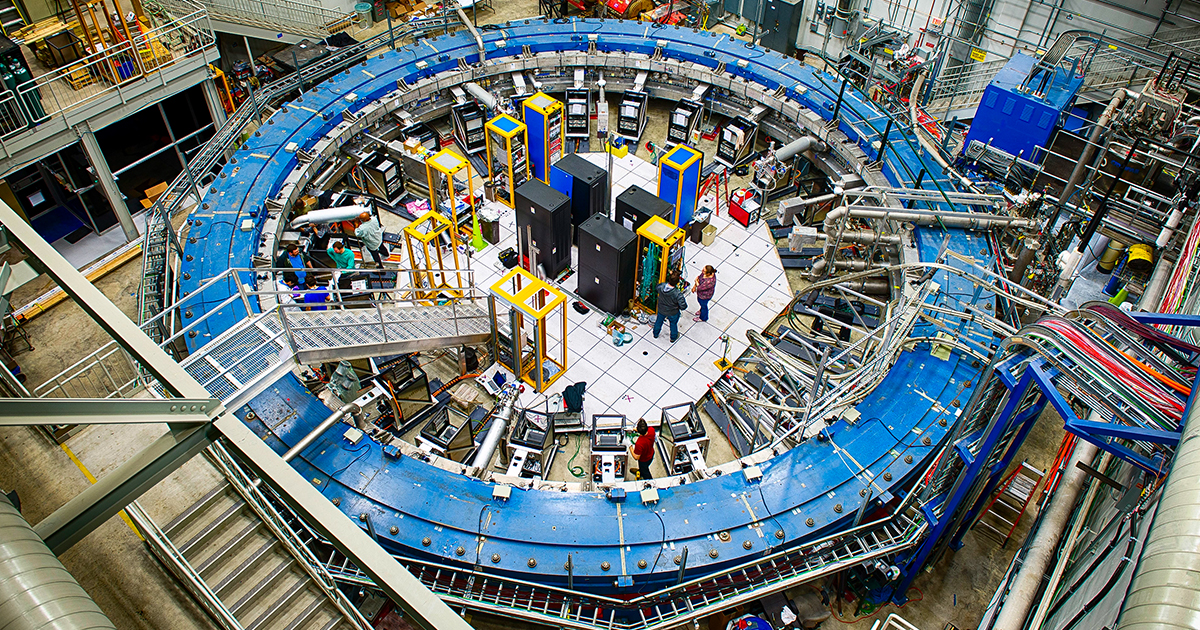
Muon Mystery Solved: New Calculations Match Experiments

Image source: www.quantamagazine.org

Summary: Physicists solved the long-standing muon mystery with new theoretical work that matches experimental results precisely. This confirms current theories and rules out unknown particles. Why it matters: It shifts focus back to established models for future research.

Key Points:

  • New lattice QCD calculations match experiments to one part in 100 billion, resolving a decades-old discrepancy (2021).

  • The Brookhaven National Lab experiment from 2001 showed unexpected results that puzzled physicists for years.

  • A data-driven method was used to predict muon g-factor size with high precision in June 2020.

  • Fermilab's precise measurement in April 2021 sharply differed from predictions, nearly crossing discovery threshold.

  • The BMW group spent a decade developing techniques and waiting for computing power to simulate quark behavior accurately.

Why it matters: If you're working on particle physics experiments or theories involving muons, this changes how you approach g-factor calculations. The precise match confirms current models without needing new physics, shifting focus back to established frameworks.

Security-challenges
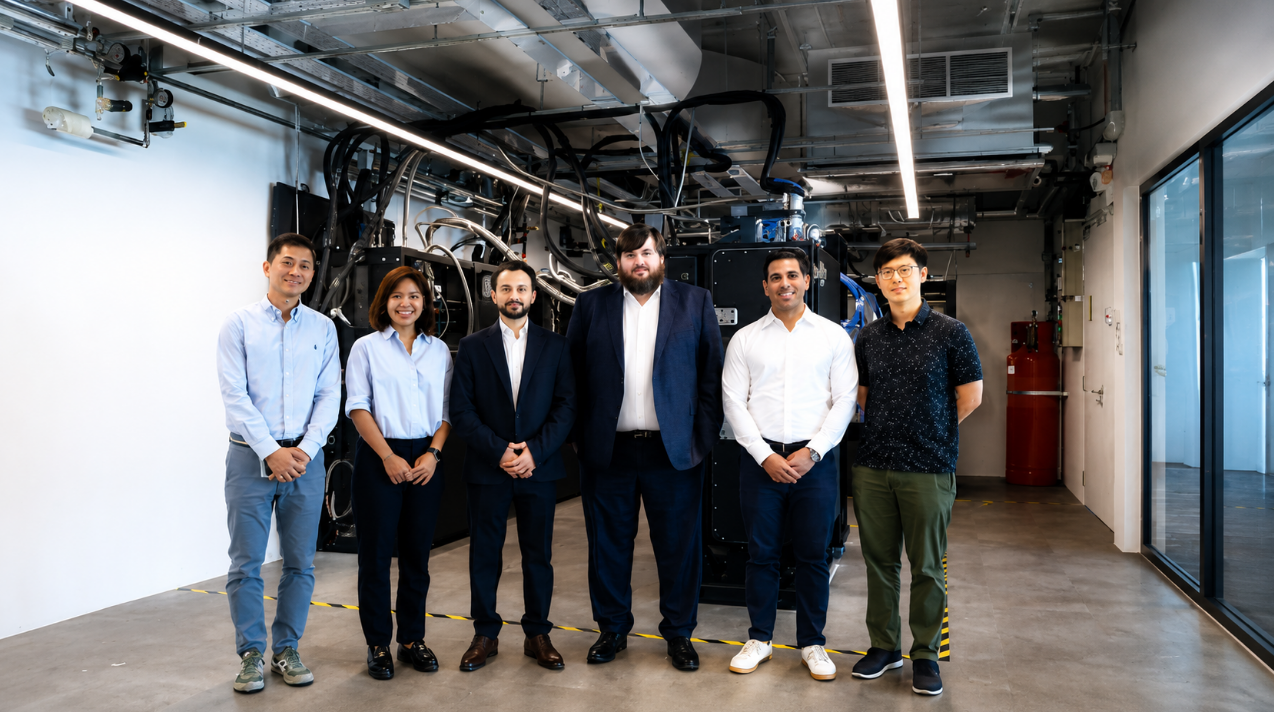
Quantum Threat Grows: Bitcoin at Risk

Image source: thequantuminsider.com

Summary: EY brings on-site quantum computing, IQM registers 183K new shares — crypto faces an uncertain future with quantum tech.

Key Points:

  • EY announces plans for in-house quantum computing to address growing security challenges

  • IQM Quantum Computers registers 183,619 new shares following ESOP subscriptions on July 29, 2026

  • Bitcoin and other digital assets are at risk due to the expanding quantum security threat

  • A company CEO predicts that certain technology will dominate the market post-quantum advancements

  • Security teams must adapt as quantum computing poses new risks to traditional cryptographic methods

Why it matters: If you're handling Bitcoin or other digital assets, the rise of quantum computing could expose your funds to unprecedented threats. EY's move towards on-site quantum solutions signals a shift in how major firms will approach security moving forward. Smaller operations may need to rethink their cryptographic strategies as these technologies become more prevalent.

Chemical-industry
Chemical Giants Partner With Quantum Tech for Next-Gen Solutions

Image source: www.insidequantumtechnology.com

Summary: Pharma and chemical giants are partnering with quantum tech firms to optimize reactions, discover advanced catalysts, and simulate molecular structures. AstraZeneca's June 2025 collaboration with IonQ, AWS, and NVIDIA is a major step forward.

Key Points:

  • BASF and Merck KGaA joined QUTAC in 2023 to translate quantum computing basics into market-ready chemical applications.

  • IonQ and AstraZeneca's June 2025 collaboration with AWS and NVIDIA aims to advance quantum computing for industrial reactions.

  • BMW Group partnered with Quantinuum to model chemical reactions inside EV batteries, enhancing performance materials development.

  • Nippon Steel collaborated with Quantinuum in 2024 to research structural carbon materials and industrial catalysts.

  • The QuPharma Initiative received a £6.85 million Innovate UK grant in 2023 to build application-specific quantum systems for chemical modeling.

Why it matters: If you're working on optimizing industrial reactions or developing advanced catalysts, the partnerships between pharma and chemical giants with quantum tech firms could significantly impact your workflow. For instance, BASF's involvement in QUTAC translates quantum computing basics into market-ready applications, potentially speeding up product development cycles.

Security
Qrypt's Quantum Keys Generate Identical Endpoints

Image source: www.insidequantumtechnology.com

Summary: Qrypt talks about generating identical keys across endpoints, with Nvidia playing a role in non-crypto apps. Why it matters: Enhanced security and reliability in distributed systems.

Key Points:

  • Podcast episode covers Qrypt's key generation for multiple endpoints

  • Certified single QRNGs are essential for secure cryptographic operations

  • Nvidia involved in non-computing quantum technology applications

  • Entanglement-based networks could shift sales strategies in the future

  • Non-cryptographic QRNG applications explored, expanding tech use cases

Why it matters: If you're managing distributed systems with strict security requirements, Qrypt's identical key generation across endpoints is a game-changer. It ensures consistency and reliability without manual intervention. However, the cost of certified single QRNGs might be prohibitive for smaller setups.

Quantum
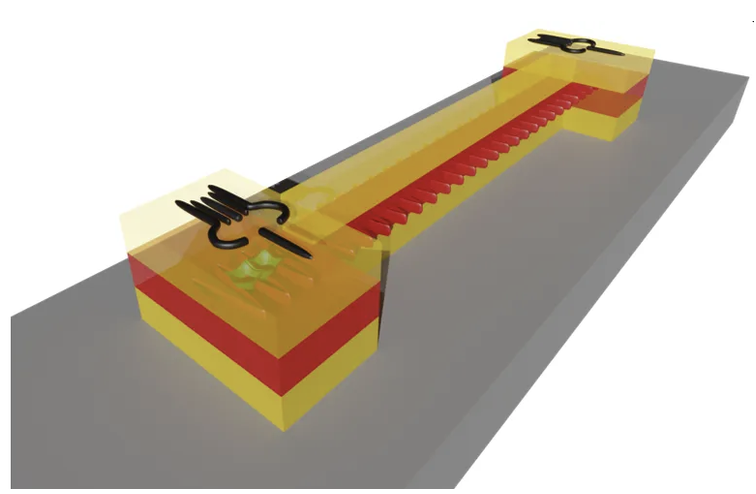
Daily and Quantum Business Horizon Partner to Boost Quantum Computer Performance

Image source: thequantuminsider.com

Summary: Daily, Quantum Business Horizon, and Quantum Machines partner to boost quantum computer performance with a $300m CHIPS Award for GlobalFoundries' silicon photonics research. This could scale quantum computers up to 1 million qubits.

Key Points:

  • Daily, Quantum Business Horizon, and Quantum Machines have partnered to improve quantum computer operations.

  • $300 million in funding from the CHIPS Award will support GlobalFoundries' silicon photonics research efforts.

  • The new chip architecture has the potential to scale quantum computers up to 1 million qubits, overcoming current limitations.

  • This breakthrough could significantly enhance the capabilities of quantum computing systems.

  • Researchers are optimistic about the prospects for this innovation in advancing quantum computing technology.

Why it matters: If you're working on scaling quantum computers, this partnership and new architecture could be a game-changer. The potential to scale up to 1 million qubits addresses current limitations and opens doors for tackling complex problems.

Cybersecurity
Bitcoin Faces Quantum Threat; IQM Registers Shares

Image source: thequantuminsider.com

Summary: EY announced on-site quantum computing capabilities, posing a threat to Bitcoin's security. IQM Quantum Computers registered new shares, signaling industry growth.

Key Points:

  • EY unveiled on-site quantum computing capabilities on July 29, 2026, challenging digital asset security

  • IQM Quantum Computers registered 183,619 new shares following ESOP subscriptions around the same date

  • Bitcoin and other digital assets face a growing quantum security challenge due to advancements in quantum computing

  • The ESOP subscription process took place on or around July 29, 2026, leading to significant share growth for IQM Quantum Computers

  • Developers must now consider the implications of quantum computing on cryptographic systems and digital asset protection

Why it matters: If you're working with blockchain technologies like Bitcoin, the rise of quantum computing poses a critical security threat. EY's announcement highlights the vulnerability of current encryption methods to future quantum attacks. For teams relying on these systems, it’s crucial to start exploring post-quantum cryptography solutions now.

New Tools & Job

  • MachineTranslation.com - MachineTranslation.com is an AI-powered translation platform that translates text and documents by comparing outputs from multiple leading AI translation models. Its consensus technology helps users choose the most accurate translation, reducing errors and improving quality across more than 330 languages. What it does Translates text and documents using AI. Compares translations from multiple AI models. Provides a consensus translation to improve accuracy. Supports 330+ languages. Helps users evaluate and refine translations. What makes it good Higher accuracy: Compares multiple AI translations instead of relying on a single model. Better quality: Consensus technology helps identify the strongest translation. Fast and easy: Delivers results in seconds with a simple interface. Broad language support: Covers over 330 languages. Useful for professionals and travelers: Suitable for business, marketing, legal, technical, and everyday communication.

  • Format Factory - Format Factory is a browser-based workbench for common audio and video conversion jobs. It supports batch processing for video and audio conversion, compression, merging, audio extraction, and audio removal, with transparent credits and temporary results. Try Format Factory for practical media conversion without installer bundles or per-file setup.

  • HappyHorse.AI - HappyHorse.AI is a multimodal AI video generator for creators, marketers, and social media teams. Users can create videos from text prompts, animate images, or generate videos from reference characters. The platform focuses on browser-based video creation and native audio support.

  • NeatScribe - NeatScribe is designed for anyone who needs to reuse information from recorded speech. It creates timestamped transcripts, supports translation, and exports results as text files, documents, subtitles, captions, or timed lyrics.

  • Sakana Marlin - Sakana Marlin is Sakana AI's first commercial product: an autonomous 'Ultra Deep Research' agent positioned as a Virtual Chief Strategy Officer. Given a research topic, Marlin works autonomously for up to roughly eight hours, forming hypotheses, gathering and reconciling information from online sources, and synthesizing a detailed strategy report up to ~100 pages plus executive-summary slides. It builds on Sakana AI research including AB-MCTS (NeurIPS 2025 Spotlight) and The AI Scientist (published in Nature). A closed beta ran from April 2026 with ~300 professionals across finance and consulting.

  • Forward Deployed Engineer - UK - Forward Deployed Engineer - UK at GitLab — sourced first-party from greenhouse:gitlab on 2026-05-25.

  • Member of Technical Staff – AI Safety - Empirical AI safety research at Redwood Research focused on alignment, control, and adversarial robustness.

  • Senior AI Engineer - Join Mistral AI to build and deploy frontier open-weight LLMs.

  • Software Engineer, Trust - Notion is seeking a Senior Software Engineer to build authentication and security features, ensuring the platform remains safe and trusted by millions of users. The role involves developing scalable systems to detect and mitigate risks, shaping AI safety controls, and collaborating across teams to embed trust and security into Notion's growth. The position requires 5-8 years of experience in trust, safety, authentication, or security.

  • Firmware Engineer - The Firmware Engineer will work on firmware development for embedded processors, troubleshooting hardware-software integration issues, and supporting product development cycles. The role requires expertise in C/C++, ARM processors, FPGAs, and embedded Linux, with a preference for FPGA device experience and real-time systems.

QUICK HITS

Read more news here →

THAT'S A WRAP

Partner with Us

Showcase your product to our engaged community of Tech enthusiasts

Our newsletter reaches a diverse audience of tech professionals, investors, engineers, managers, and business leaders worldwide. Get in touch today.

Comments

Subscribe to join the conversation...

Be the first to comment

Want this in your inbox?

Get the daily edition delivered free every morning.

Join 2,490 builders reading daily.

Also get