Skip to content
ContentBuffer
ContentBuffer
September 30, 2026·~4 min read
ContentBuffer

ContentBuffer

Welcome, Tech Leaders.

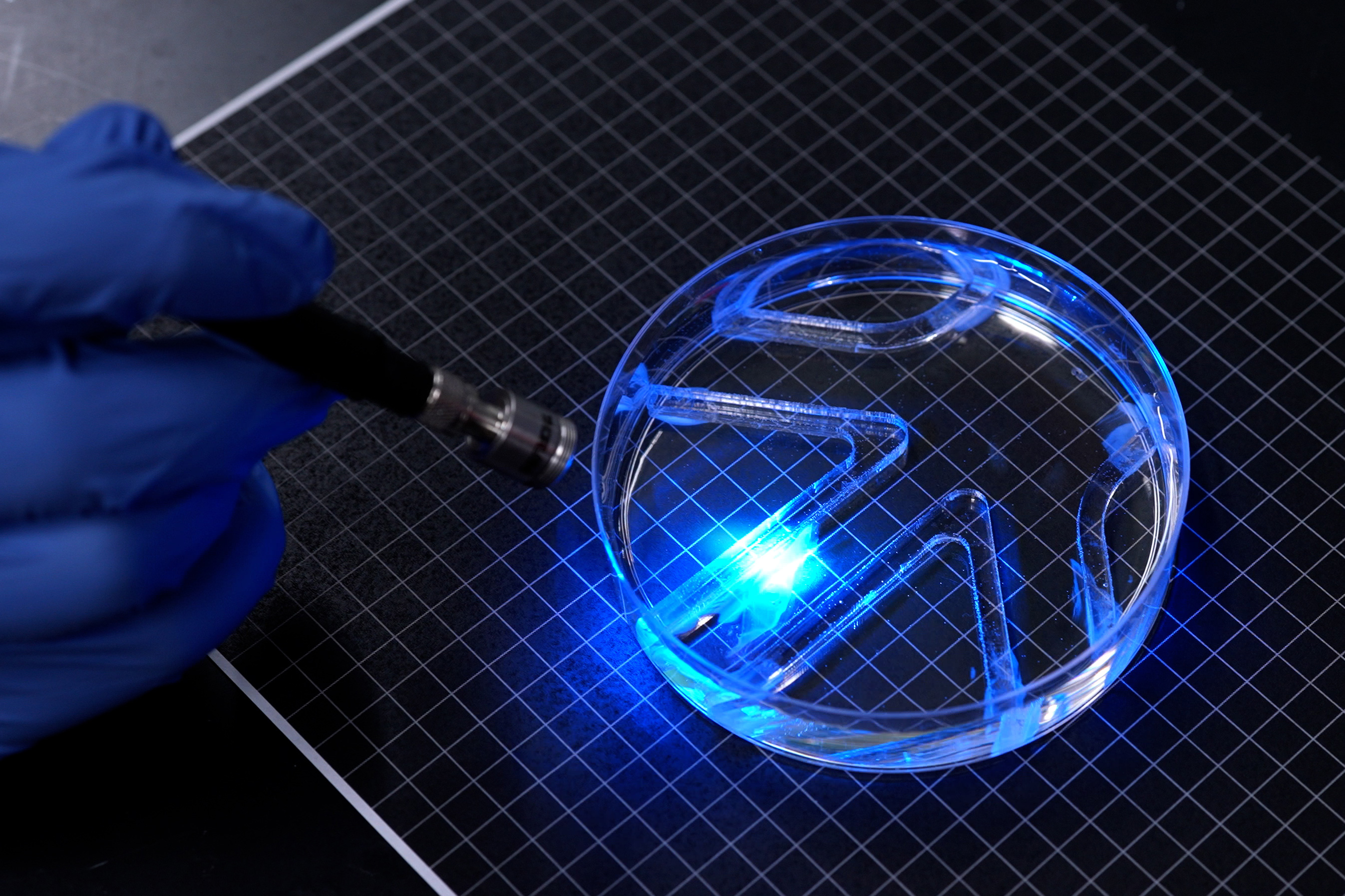
MIT engineers have developed a soft robot that can swim through water by flapping its fins in response to light. This robot, about the size of a stick of gum, uses genetically engineered muscle cells to move. The cells twitch when exposed to light, causing the fins to flap and propel the robot forward. This breakthrough is significant for robotics, as it's the first example of a two-dimensional, muscle-powered robot capable of locomotion. The robot can swim a distance of about four times its body length in one minute, showcasing its strength relative to its size. Researchers optimized the gel skeleton for maximum muscle movement and force, using square grooves and a half-millimeter-thin film of gel. This development could pave the way for more advanced, light-controlled robots in the future.

Charlie Kemp, cofounder and CTO of Hello Robot, shares insights on how robotics can empower people with disabilities and older adults. His journey from MIT to real-world applications highlights the potential of robotics to enhance independence. Hello Robot's focus is on assistive robots that improve daily living, with a prototype already influencing their work. The field's young age means there's still much to discover and build. Let's dive deeper…

In today's ContentBuffer update:

  • Engineers unveil ScaFi: Scalable fish-inspired robots

  • Infrared-Powered Robot Jumps Continuously

  • FDA Clears Personal Exoskeleton Eve for Sale

  • UR Series Robots Speed Up Automation Integration

  • 5 new AI tools & 5 new AI jobs

  • More tech news

Latest Development

Soft-robotics
MIT's Light-Controlled Soft Robot Flaps Through Water

Image source: news.mit.edu

Summary: MIT engineers built a light-powered soft robot that can swim by flapping its fins. The robot uses muscle cells to move, making it the first of its kind. This is a big deal for robotics.

Key Points:

  • The robot's skeleton is a film of gel, about the length and width of a stick of gum.

  • Each fin is covered with a layer of live muscle cells, much thinner than a single strand of hair.

  • Cells are genetically engineered to twitch in response to light, causing fins to flap.

  • The robot can swim four times its body length in one minute, showcasing its strength.

  • Square grooves in the gel were found to be optimal for muscle alignment and movement.

Why it matters: This light-controlled robot, developed by MIT engineers, is the first of its kind to use muscle cells for locomotion. If you're working on robotics projects that require precise, light-based control, this could be a game-changer. The robot's ability to swim and navigate through water with muscle cells opens up new possibilities for advanced, light-powered robots.

Assistive-technology
Charlie Kemp Shares Insights on Robotics and Assistive Tech

Image source: assets.robotsguide.com

Summary: Charlie Kemp discusses how robotics can empower the elderly and disabled, emphasizing the importance of focusing on the end-users.

Key Points:

  • Charlie Kemp's interest in robotics began at MIT as an undergraduate, focusing on AI challenges.

  • Hello Robot's work ranges from humanoid robots to assistive tech for older adults and those with severe mobility impairments.

  • The Robots for Humanity project stands out as a favorite, showcasing the potential of robotics to improve quality of life.

  • Real-world interactions reveal new opportunities for improvement, shaping the way robots are built and used.

  • The field of robotics is still young, offering vast opportunities for innovation and improvement.

Why it matters: Charlie Kemp's work at Hello Robot highlights the potential of robotics to improve the lives of the elderly and disabled. His insights, from MIT to real-world applications, underscore the importance of focusing on user needs. This approach can lead to more effective and impactful assistive technologies.

Underwater-robotics
Engineers Unveil Scalable Fish-Inspired Robots

Image source: robohub.org

Summary: EPFL and NYU unveiled ScaFi, a scalable fish-inspired robot that could transform underwater robotics. Why you should care: It solves the scaling problem for fish-like robots, making them more versatile and efficient.

Key Points:

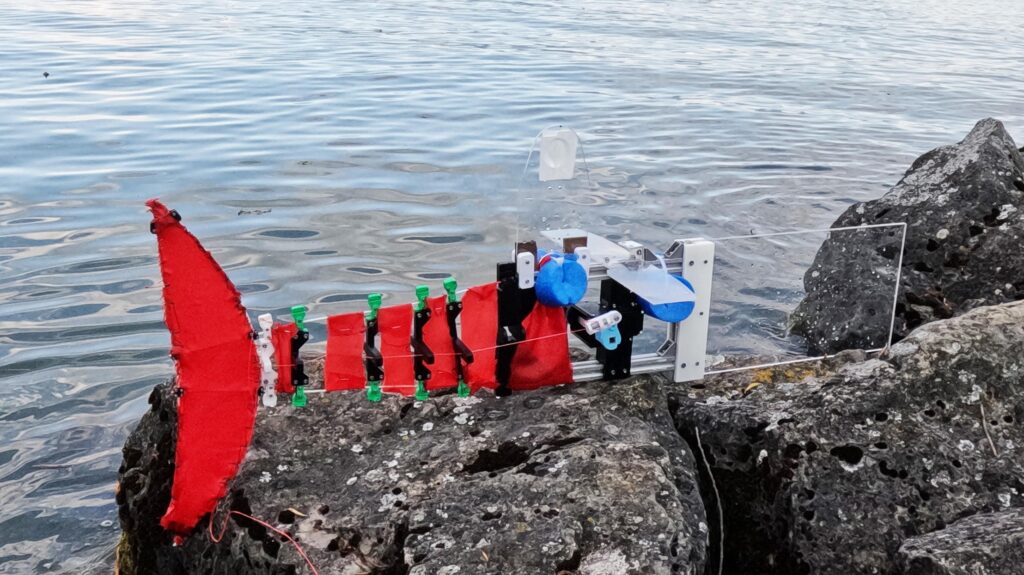
  • EPFL and NYU engineers unveiled ScaFi, a fish-like robot that scales in size while maintaining swimming efficiency.

  • ScaFi features a rigid front section and a flexible tail made of fiberglass rods, with a single motor pulling two tendons.

  • The team built three robots, roughly 0.6, 1.1, and 2.9 meters long, testing them in various aquatic environments.

  • Swimming motion lined up closely once adjusted for body size, with swirling water patterns similar to those left by real fish.

  • The research was partially funded by the European Union's Horizon 2020 program under Marie Skłodowska-Curie grant agreement No. 945363.

Why it matters: If you're working on underwater robotics, ScaFi could be a game-changer. The team built three robots, testing them in Swiss streams, Lake Geneva, and creeks. While energy efficiency and agility vary with size, ScaFi opens new possibilities in underwater robotics, making fish-like robots more versatile and efficient.

Environmental Robotics
Elastic Robot Jumps Continuously With Infrared Light

Image source: assets.newatlas.com

Summary: Infrared-powered elastic robot jumps continuously, adapting to terrain and obstacles. Perfect for unstructured environments and data collection.

Key Points:

  • Robot uses liquid crystal elastomer cord to store and release energy, enabling continuous jumping.

  • V-shaped aluminum stopper controls jumping behavior, allowing precise direction and height control.

  • Robot can adapt to various terrains, liquids, and obstacles, ideal for environmental navigation.

  • Design allows for autonomous data collection in hard-to-reach areas, enhancing exploration capabilities.

  • Potential applications include terrestrial and extra-planetary exploration, swarm robotics, and more.

Why it matters: If you're working on environmental monitoring or space exploration, this robot could be a game-changer. Its ability to jump continuously and adapt to different terrains makes it ideal for gathering data in unstructured environments. The design's potential for swarm robotics also opens up new possibilities for coordinated exploration and data collection.

Medical Robotics
FDA Clears Eve Exoskeleton for Commercial Sale

Image source: assets.newatlas.com

Summary: FDA clears Eve exoskeleton for commercial sale, a tool for standing, not rolling. Medicare and other insurers are already covering costs for some patients.

Key Points:

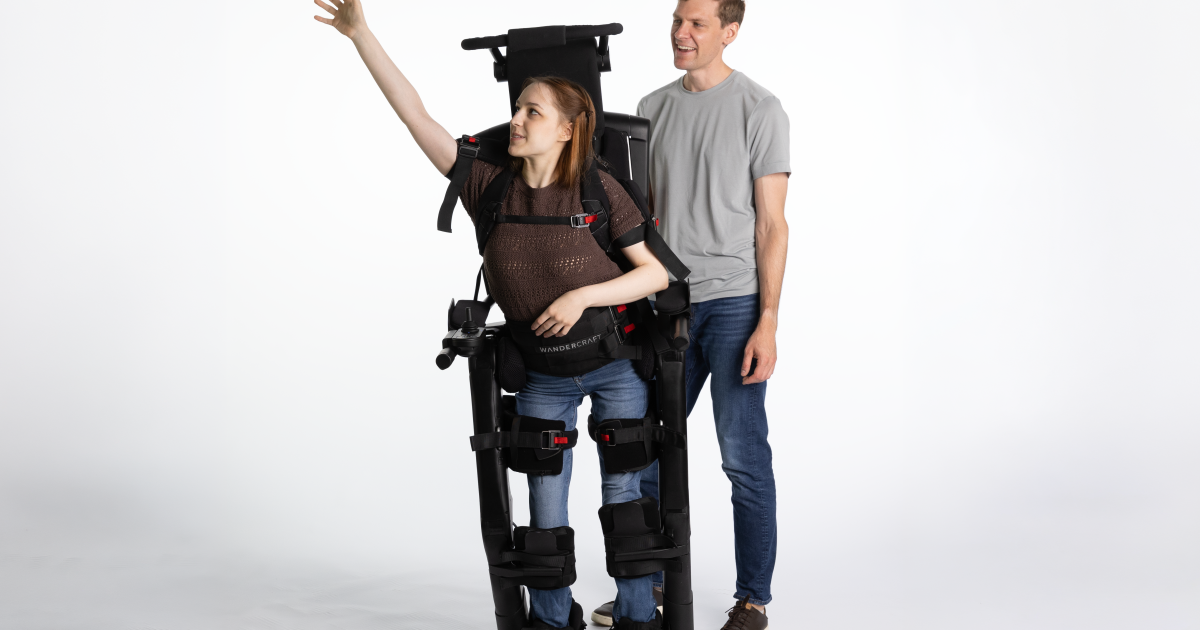
  • Eve exoskeleton authorized by FDA for commercial sale, designed for spinal cord injury patients.

  • Device straps on like a rigid vest, uses 12 motors for walking, and has onboard sensors for balance.

  • Top speed of 0.25 meters per second, battery lasts up to four hours, safety mechanism for power outages.

  • Study involved 16 patient-caregiver pairs, with 15 hitting target walking speed and all completing tasks.

  • Medicare, veterans' health system, and workers' compensation insurance are covering costs for some patients.

Why it matters: If you're a spinal cord injury patient looking for moments of standing, Eve could be a game-changer. It's designed for indoor use and requires a certified caregiver. Medicare and other insurers are already covering costs for some patients, making it more accessible.

Automation
UR Series Robots Accelerate Automation Integration

Image source: spectrum.ieee.org

Summary: UR Series robots streamline integration into automation systems, reducing setup time and complexity.

Key Points:

  • UR Series robots connect directly with cameras and EOATs, eliminating external cabling and hardware.

  • UR Series robots enable cleaner and faster deployment of advanced automation systems.

  • UR Series robots are designed to accelerate how robots are integrated into complete automation systems.

  • UR Series robots streamline integration, reducing setup time and complexity.

  • UR Series robots enable cleaner and faster deployment of advanced automation systems.

Why it matters: UR Series robots accelerate the integration of robots into automation systems, reducing setup time and complexity. This benefits teams looking to integrate robots into their workflows without additional setup, enabling faster deployment and cleaner automation processes. The UR Series is designed to streamline integration, reducing setup time and complexity.

New Tools & Job

  • MachineTranslation.com - MachineTranslation.com is an AI-powered translation platform that translates text and documents by comparing outputs from multiple leading AI translation models. Its consensus technology helps users choose the most accurate translation, reducing errors and improving quality across more than 330 languages. What it does Translates text and documents using AI. Compares translations from multiple AI models. Provides a consensus translation to improve accuracy. Supports 330+ languages. Helps users evaluate and refine translations. What makes it good Higher accuracy: Compares multiple AI translations instead of relying on a single model. Better quality: Consensus technology helps identify the strongest translation. Fast and easy: Delivers results in seconds with a simple interface. Broad language support: Covers over 330 languages. Useful for professionals and travelers: Suitable for business, marketing, legal, technical, and everyday communication.

  • Format Factory - Format Factory is a browser-based workbench for common audio and video conversion jobs. It supports batch processing for video and audio conversion, compression, merging, audio extraction, and audio removal, with transparent credits and temporary results. Try Format Factory for practical media conversion without installer bundles or per-file setup.

  • HappyHorse.AI - HappyHorse.AI is a multimodal AI video generator for creators, marketers, and social media teams. Users can create videos from text prompts, animate images, or generate videos from reference characters. The platform focuses on browser-based video creation and native audio support.

  • NeatScribe - NeatScribe is designed for anyone who needs to reuse information from recorded speech. It creates timestamped transcripts, supports translation, and exports results as text files, documents, subtitles, captions, or timed lyrics.

  • Sakana Marlin - Sakana Marlin is Sakana AI's first commercial product: an autonomous 'Ultra Deep Research' agent positioned as a Virtual Chief Strategy Officer. Given a research topic, Marlin works autonomously for up to roughly eight hours, forming hypotheses, gathering and reconciling information from online sources, and synthesizing a detailed strategy report up to ~100 pages plus executive-summary slides. It builds on Sakana AI research including AB-MCTS (NeurIPS 2025 Spotlight) and The AI Scientist (published in Nature). A closed beta ran from April 2026 with ~300 professionals across finance and consulting.

  • Full Stack Engineer, Enterprise Engineering - Who we are About Stripe Stripe is a financial infrastructure platform for businesses. Millions of companies—from the world’s largest enterprises to the most ambitious startups—use Stripe to accept payments, grow their revenue, and accelerate new business opportunities. Our mission is to increase the

  • Director, Enterprise AI & Machine Learning Engineering - We're transforming the grocery industry At Instacart, we invite the world to share love through food because we believe everyone should have access to the food they love and more time to enjoy it together. Where others see a simple need for grocery delivery, we see exciting complexity and endless op

  • Staff + Sr. Software Engineer, Cloud Inference - About Anthropic Anthropic’s mission is to create reliable, interpretable, and steerable AI systems. We want AI to be safe and beneficial for our users and for society as a whole. Our team is a quickly growing group of committed researchers, engineers, policy experts, and business leaders working tog

  • Software Engineer, DevOps - About the Team OpenAI’s Hardware organization develops AI-native silicon and system-level solutions for the unique demands of advanced AI workloads. Building on efforts like Jalapeño, the team is developing future generations of AI-native silicon and tightly integrated systems to power the next gene

  • Staff Software Engineer, AI Teammates - AI Teammates are Asana’s flagship AI innovation - autonomous agents embedded directly into enterprise workflows that reason, act, and proactively drive work forward. The AI Teammates Platform (AITP) team owns the execution engine and platform layer that makes these AI Teammates effective, reliable,

QUICK HITS

Read more news here →

THAT'S A WRAP

Partner with Us

Showcase your product to our engaged community of Tech enthusiasts

Our newsletter reaches a diverse audience of tech professionals, investors, engineers, managers, and business leaders worldwide. Get in touch today.

Comments

Subscribe to join the conversation...

Be the first to comment

Want this in your inbox?

Get the daily edition delivered free every morning.

Join 3,549 builders reading daily.

Also get