Skip to content
ContentBuffer
ContentBuffer
October 21, 2026·~4 min read
ContentBuffer

ContentBuffer

Welcome, Tech Leaders.

Robotics is entering its LEGO era, with foundational software and building blocks being rethought. This shift is crucial for scaling innovation in robotics, making it easier for developers to build both general and special-purpose robots. The founder of Techable Ventures, who has a strong network and background in Nvidia and Intel, is helping connect founders to top talent. This era is defined by the need for talent, with big companies like Anthropic and Nvidia attracting the best minds. The shift towards modular and flexible software will enable faster development cycles and more advanced robots.

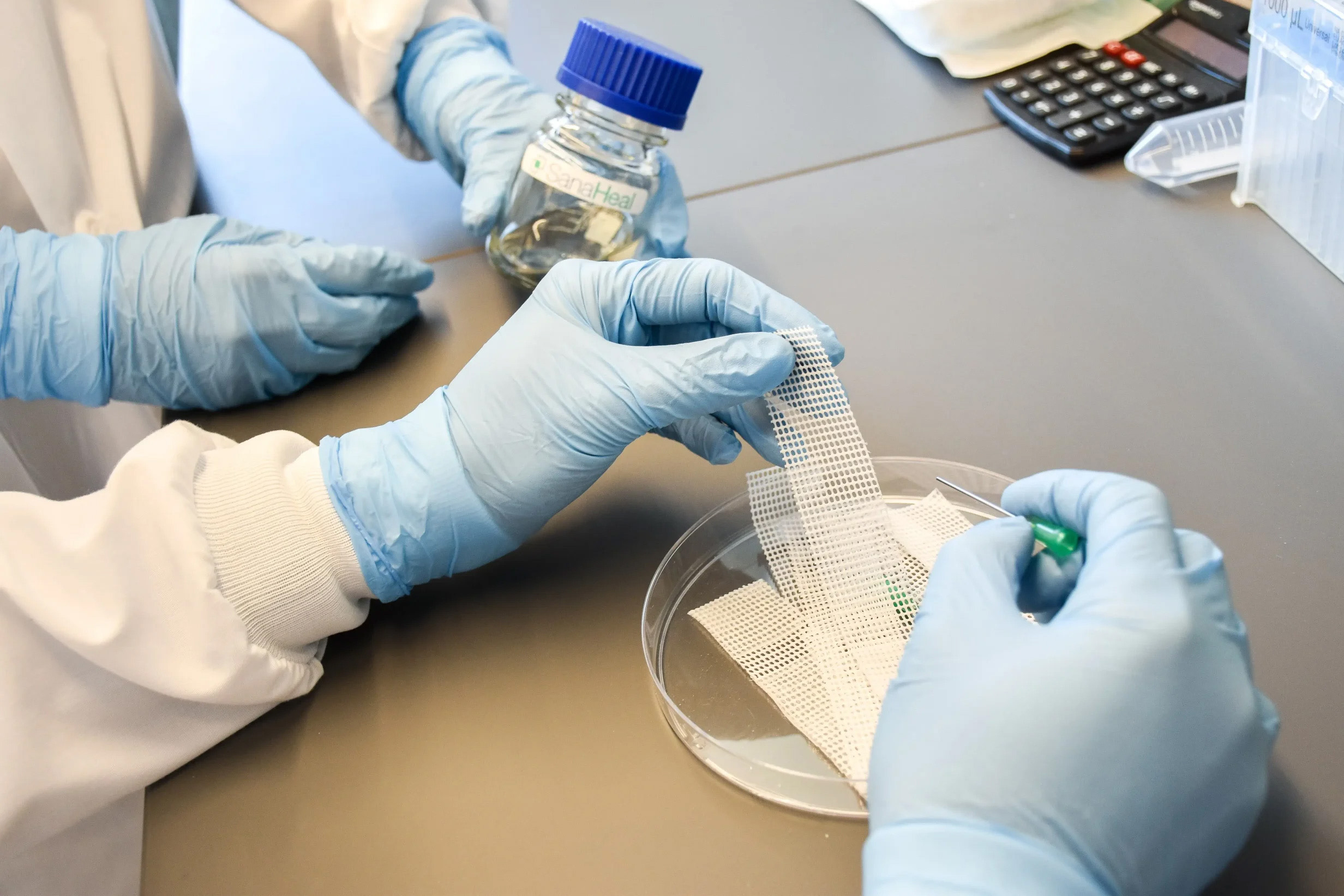
SanaHeal's biocompatible adhesive, inspired by barnacles and spider webs, has received regulatory approval to stop trauma bleeding. This technology can form air- and fluid-tight seals on wet and uneven surfaces, making surgical procedures like tissue connection simpler and less invasive. Human trials for surgical use begin next year, with the potential to reduce costs and improve outcomes for complex procedures. The adhesive is biocompatible, minimizing immune responses and scar tissue buildup, and can be used in various surgical methods, including open, laparoscopic, and endoscopic surgeries. Let's dive deeper…

In today's ContentBuffer update:

  • Light-Powered Robot Swims Maze

  • ALBATROSS: The Robot That Deploys from Air to Sail

  • Frog-Like Robot Hops, Climbs, and Swims with Snap-Actuated Limbs

  • Perseverance rover breaks Opportunity's Mars driving record

  • 5 new AI tools & 5 new AI jobs

  • More tech news

Latest Development

Foundational-software
Robotics Industry Enters LEGO Era with Foundational Software Overhaul

Image source: techcrunch.com

Summary: Robotics is entering its LEGO era, with foundational software being rethought to enable faster innovation. This shift is crucial for scaling robotics development and attracting top talent.

Key Points:

  • Techable Ventures founder spent nearly seven years as a product marketer at Nvidia before starting the VC firm.

  • The founder held the same role at a company later bought by Intel, showcasing a track record in tech.

  • Interconnect Systems, where the founder was a digital signal processing engineer, was later acquired by Molex.

  • Robotics is in a LEGO era, with foundational software and building blocks being rethought for scalability.

  • Talent is critical for robotics innovation, with big companies like Anthropic and Nvidia attracting the best minds.

Why it matters: Foundational software and building blocks in robotics are being rethought, making it easier for developers to build advanced robots. This shift is crucial for scaling innovation and attracting top talent, as seen with companies like Anthropic and Nvidia. The LEGO era of robotics is defined by the need for modular and flexible software, enabling faster development cycles.

Biotech
SanaHeal's Wet-Tissue Adhesive Gets Regulatory Approval

Image source: news.mit.edu

Summary: SanaHeal's wet-tissue adhesive gets regulatory approval, simplifying surgeries and potentially lowering costs. Human trials for surgical use begin next year.

Key Points:

  • SanaHeal's adhesive technology can form air- and fluid-tight seals on wet and uneven surfaces, inspired by nature's sticky materials.

  • Regulatory approval for trauma bleeding control marks a significant milestone for SanaHeal's technology, developed at MIT.

  • Human trials for surgical use begin next year, with potential to reduce costs and improve outcomes for complex procedures.

  • The adhesive is biocompatible, minimizing immune responses and scar tissue buildup, making it safer for patients.

  • SanaHeal's technology can be used in various surgical methods, including open, laparoscopic, and endoscopic surgeries.

Why it matters: If you're dealing with trauma bleeding or complex surgical procedures, SanaHeal's new adhesive could simplify your workflow. It's less invasive and easier to use with surgical robots, potentially lowering costs and improving patient outcomes. Human trials begin next year, with the potential for widespread adoption in the coming years.

Muscle-powered Robotics
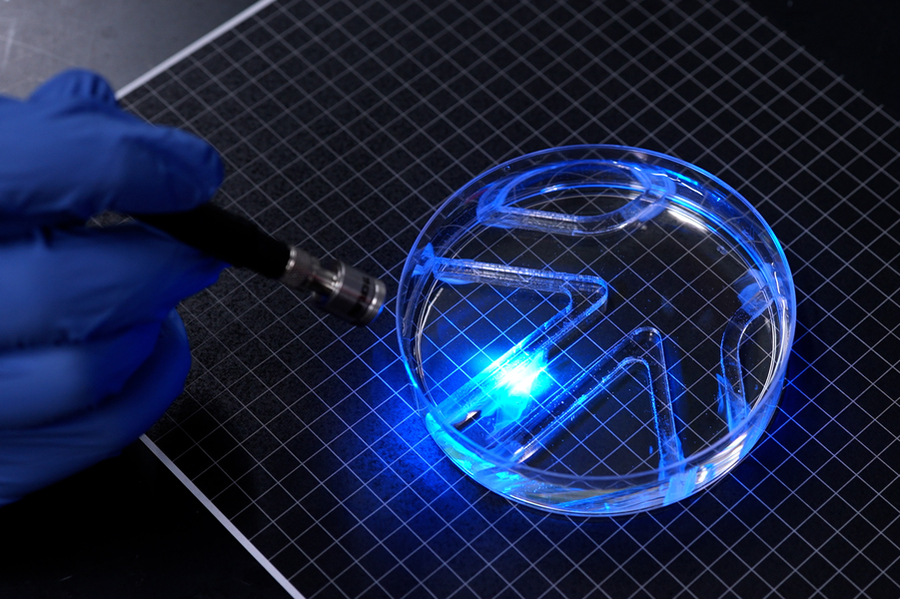
Light-Powered Robot Swims Through Water, 4x Its Length in a Minute

Image source: robohub.org

Summary: Researchers built a light-activated robot that swims through water, showcasing muscle-powered robotics. The robot, about the size of a stick of gum, can swim four times its length in a minute.

Key Points:

  • Robot uses genetically engineered muscle cells to twitch and propel itself through water.

  • Gel skeleton made from gelatin methacrylate (GelMA) supports muscle cells and allows precise control.

  • Muscle cells form a thin layer along grooves stamped into the gel, optimizing movements for force.

  • Square grooves were found to be optimal for muscle alignment and movement efficiency.

  • Robot can swim a distance of about four times its body length in one minute, mimicking a cow shark.

Why it matters: This robot marks a significant advance in muscle-powered robotics, with potential applications in biomedical devices and soft robotics. For researchers working on muscle tissue engineering, this development offers a new platform for studying muscle behavior and optimizing muscle movements.

Autonomous
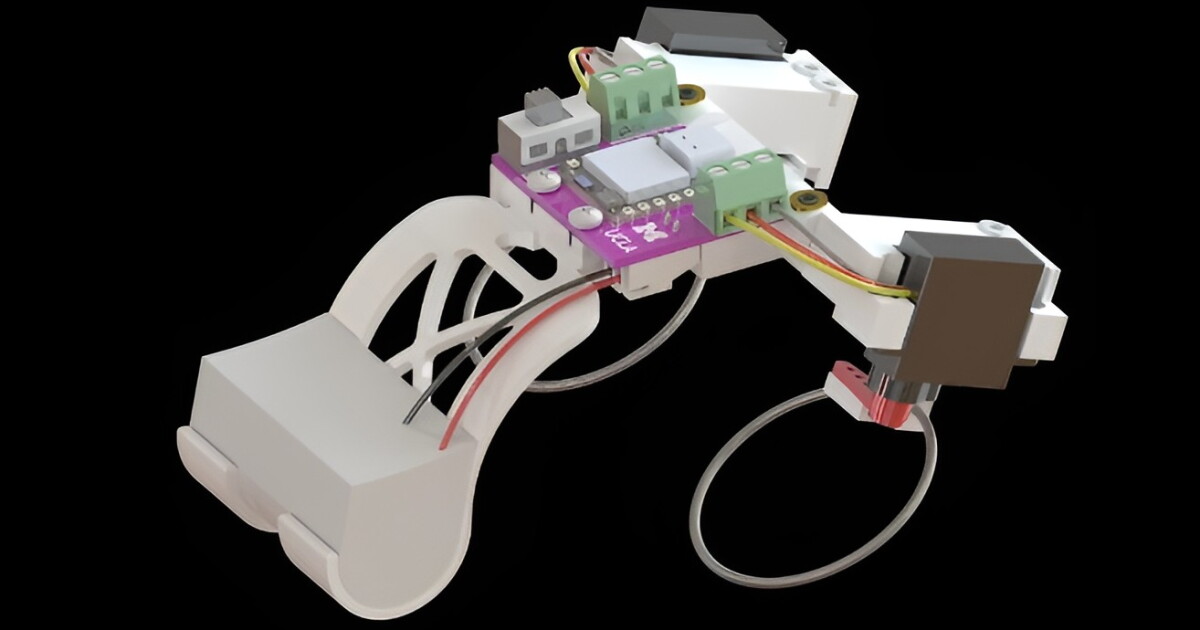
ALBATROSS Robot Deploys from Air to Sail Remote Waters

Image source: assets.newatlas.com

Summary: Researchers developed ALBATROSS, a robot that can be dropped from aircraft, land in water, and sail autonomously. It's set to revolutionize remote water monitoring and maritime security.

Key Points:

  • ALBATROSS deploys from aircraft at 150 meters, landing in water with minimal impact.

  • The robot rights itself and uses wind energy to sail autonomously, reaching 1 km/h.

  • During tests, ALBATROSS operated for three hours, collecting data on humidity, heat, and wind.

  • Future versions will include underwater sensors and larger energy storage systems.

  • ALBATROSS's unique design allows for long-term missions with minimal energy consumption.

Why it matters: ALBATROSS's ability to deploy from aircraft and sail autonomously makes it ideal for environmental monitoring and maritime security. Researchers estimate that similar platforms without autorotation would experience 18.5 times more impact energy upon landing. This makes ALBATROSS a safer and more efficient solution for remote areas. Future versions will include underwater sensors and larger energy storage systems, further enhancing its capabilities.

Mechanical-robotics
Frog-Like Robot Hops, Climbs, and Swims with Snap-Actuated Limbs

Image source: assets.newatlas.com

Summary: Engineers built a frog-like robot that hops, climbs, and swims using snap-actuated limbs. This design could lead to more efficient and powerful robots, especially for small-scale applications.

Key Points:

  • The robot uses Nitinol rods bent into helical shapes to store and release energy, propelling it forward.

  • The robot can hop across grass and sand, climb small steps, and swim at about half a body length per second.

  • The robot's limbs store elastic energy and release it in sudden bursts, achieving speeds up to 3.21 body lengths per second on wood.

  • The robot can steer by moving its two limbs at different rates, demonstrating autonomous steering toward a light source.

  • The design rules could eventually support robots just a few millimeters wide, opening new possibilities in robotics.

Why it matters: This robot's snap-actuated limbs allow for faster movement on various surfaces, reaching 3.21 body lengths per second on wood and averaging 2.46 body lengths per second across all surfaces. This design could lead to more efficient and powerful robots, especially for small-scale applications. Researchers at UCLA and the University of Michigan have built a frog-like robot that moves using flexible Nitinol rods that snap between shapes, enabling it to hop, climb, and swim.

Exploration
Perseverance Breaks Opportunity's Mars Driving Record

Image source: spectrum.ieee.org

Summary: Perseverance rover breaks Opportunity's 15-year-old Mars driving record, showcasing advancements in robotic exploration and mission planning.

Key Points:

  • NASA's Perseverance rover has driven 28.10 miles on Mars, breaking Opportunity's 7-year-old record of 28.06 miles.

  • Perseverance achieved this milestone on its 2,006th Martian day, demonstrating sustained performance and efficiency.

  • The rover's success highlights advancements in robotic systems, enabling longer and more efficient missions on Mars.

  • ESA is rehearsing the Rosalind Franklin rover's first journey on Earth, preparing for similar challenges on Mars.

  • ICRA 2026 conference panels focus on ROI and sustainability in robotics, reflecting growing interest in these areas.

Why it matters: Perseverance's record-breaking drive highlights the efficiency and longevity of modern robotic systems. If you're planning Mars missions, this showcases the potential for sustained exploration and data collection. The rover's success sets a new standard for endurance and performance, crucial for future missions.

New Tools & Job

  • MachineTranslation.com - MachineTranslation.com is an AI-powered translation platform that translates text and documents by comparing outputs from multiple leading AI translation models. Its consensus technology helps users choose the most accurate translation, reducing errors and improving quality across more than 330 languages. What it does Translates text and documents using AI. Compares translations from multiple AI models. Provides a consensus translation to improve accuracy. Supports 330+ languages. Helps users evaluate and refine translations. What makes it good Higher accuracy: Compares multiple AI translations instead of relying on a single model. Better quality: Consensus technology helps identify the strongest translation. Fast and easy: Delivers results in seconds with a simple interface. Broad language support: Covers over 330 languages. Useful for professionals and travelers: Suitable for business, marketing, legal, technical, and everyday communication.

  • Format Factory - Format Factory is a browser-based workbench for common audio and video conversion jobs. It supports batch processing for video and audio conversion, compression, merging, audio extraction, and audio removal, with transparent credits and temporary results. Try Format Factory for practical media conversion without installer bundles or per-file setup.

  • HappyHorse.AI - HappyHorse.AI is a multimodal AI video generator for creators, marketers, and social media teams. Users can create videos from text prompts, animate images, or generate videos from reference characters. The platform focuses on browser-based video creation and native audio support.

  • NeatScribe - NeatScribe is designed for anyone who needs to reuse information from recorded speech. It creates timestamped transcripts, supports translation, and exports results as text files, documents, subtitles, captions, or timed lyrics.

  • Sakana Marlin - Sakana Marlin is Sakana AI's first commercial product: an autonomous 'Ultra Deep Research' agent positioned as a Virtual Chief Strategy Officer. Given a research topic, Marlin works autonomously for up to roughly eight hours, forming hypotheses, gathering and reconciling information from online sources, and synthesizing a detailed strategy report up to ~100 pages plus executive-summary slides. It builds on Sakana AI research including AB-MCTS (NeurIPS 2025 Spotlight) and The AI Scientist (published in Nature). A closed beta ran from April 2026 with ~300 professionals across finance and consulting.

QUICK HITS

Read more news here →

THAT'S A WRAP

Partner with Us

Showcase your product to our engaged community of Tech enthusiasts

Our newsletter reaches a diverse audience of tech professionals, investors, engineers, managers, and business leaders worldwide. Get in touch today.

Comments

Subscribe to join the conversation...

Be the first to comment

Want this in your inbox?

Get the daily edition delivered free every morning.