Skip to content
AI Newsletter

AI just cracked a 200-year-old archive mystery

In this issue

From the ContentBuffer AI newsletter

ContentBuffer
ContentBuffer
November 28, 2026·~6 min read
ContentBuffer

ContentBuffer

Welcome, Tech Leaders.

OpenAI's newest model, GPT-6.2 Astra, identified who made an 1808 sketchbook that had sat anonymous for more than two centuries. It needed 22 minutes and nothing beyond publicly available primary and secondary sources. Astra read the material, built a theory from thin evidence, and argued its way to a name. Why should you care? This is an agent doing real research from start to finish, not just summarizing a document. If your work involves archives, digital humanities, or any domain buried in messy, unindexed sources, pay attention. Astra can also grind through open-ended jobs that run for hours or days, which shifts what you can safely hand off. The figures matter. The sketchbook holds 84 pages, 34 of them carrying pencil, ink, or watercolor drawings, and it traces an 1808 route from Montreal to Fort William and back. Astra also repaired an 8,002-row CSV transcription of the Shipboy & Henry daybook, cross-checking handwritten arithmetic against 353 images across thousands of entries in a few hours. Next up: independent confirmation. Twenty-two minutes is fast, but historians will need to test the attribution against the archival record before it sticks.

Prospero arrived as one native executable: an AI coding harness with an ImGui front end that runs on Windows, macOS, and Linux. Nothing else gets installed. Launch the binary, choose a model provider, and an agent begins work. For developers building desktop software, the notable part is the unattended operation. Agents can push through intermittent errors, and they can control the machine itself to develop, test, and debug native GUI applications. Prospero speaks both the OpenAI Chat Completions API and Anthropic's Messages API, so switching providers or going fully local takes a configuration change. The engine shares a process with the window, and rendering draws no resources while idle. That same binary can run headless, run on a remote machine over ssh, or keep working after its window closes. It targets hardware and operating systems about 25 years old. The built-in model network descends from gemma4.c under MIT, and the core software is public domain. Let's dive deeper…

In today's ContentBuffer update:

  • Robbyant Releases LingBot-Map 2.0 and LingBot-Navi for Smarter Robot Navigation

  • A Hospital's Prompt Engineer Hire Shows Where Clinical AI Work Is Heading

  • UK Says No to Nationwide Datacenter Environmental Consultation Despite 39,000 Signatures

  • ETH Zurich's InvisiSpeech decodes silently mouthed commands at about 90% accuracy

  • 5 new AI tools & 5 new AI jobs

  • More tech news

Latest Development

Autonomous Research Agents

GPT-6.2 Astra Names 1808 Sketchbook Artist in 22 Minutes Flat

Image source: substackcdn.com

Summary: GPT-6.2 Astra identified the maker of an anonymous 1808 Yale sketchbook in 22 minutes using only public sources. It also corrected an 8,002-row handwritten ledger by checking the arithmetic. If you run research agents, this is a strong signal about long-horizon autonomy.

Key Points:

  • The Beinecke Library sketchbook runs 84 pages, 34 with pencil and ink drawings or watercolors tracing an 1808 trip from Montreal to Fort William and back.

  • Astra reached its attribution by reading public sources, forming a hypothesis from limited evidence, and writing out a supporting argument on its own.

  • The model fixed an 8,002-row CSV transcription of the Shipboy & Henry daybook, checking entries against 353 ledger images over a few hours of work.

  • Astra verified handwritten arithmetic across thousands of quantities, unit prices, subtotals, and account totals, using the ledger's own math as a consistency check.

  • The unknown artist started the book in March 1808, opening on the Newfoundland coast and sketching Chaudière Falls, Fort St. Joseph, and the Rivière Creuse entrance.

Why it matters: If you're building research agents on GPT-class models, Astra is an early public example of multi-hour investigation producing a defensible answer. Archive and digital humanities teams running transcription pipelines now have a working case of a model checking its own output against internal consistency, like ledger totals. Before you rely on a 22-minute attribution in anything downstream, add verification steps and a human review gate.

Ai Coding Agents

Prospero Ships as One C++ Executable for Windows, macOS, and Linux

Image source: opengraph.githubassets.com

Summary: Prospero packages an ImGui AI coding harness as a single C++ binary for Windows, macOS, and Linux. It works with OpenAI, Anthropic, or local models, and its agents can drive the desktop to build and debug GUI apps unattended.

Key Points:

  • Prospero ships as a single C++ executable for Windows, macOS, and Linux, with no daemon or server needed, so getting started means launching one binary.

  • It speaks the OpenAI Chat Completions API and Anthropic's Messages API, so agents can target either hosted provider or a local model with a config change.

  • The engine runs in the same process as the window and can also run headless, over ssh on another machine, or in the background after the window closes.

  • Rendering is passive and uses no resources while idle, and the engine targets machines and operating systems roughly 25 years old.

  • The built-in model network derives from gemma4.c under the MIT license, while the core software is released into the public domain.

Why it matters: If you build desktop tooling, Prospero's desktop control lets an agent develop, test, and debug native GUI apps without someone clicking through each iteration. Teams running self-hosted models get a local path that uses the same APIs as OpenAI and Anthropic, so the harness doesn't tie them to one vendor. Because the core is public domain, you can fork it into an internal CI agent without waiting on a license review.

Autonomous-navigation

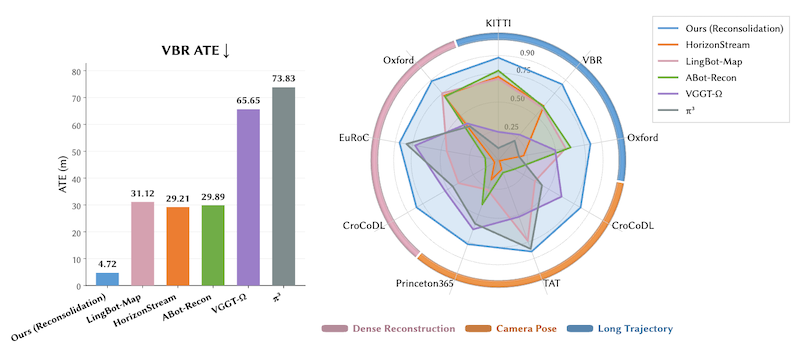
Robbyant Ships LingBot-Map 2.0, Cutting Robot Mapping Error 85% Over 5.2 km

Image source: roboticsandautomationnews.com

Summary: Robbyant open-sourced LingBot-Map 2.0 and LingBot-Navi, two models for robot mapping and navigation. Mapping error on a 5.2 km urban run fell about 85 percent, and navigation success hit 68.60 percent in simulation. Worth a look if you're building autonomous robots.

Key Points:

  • LingBot-Map 2.0 reduced average trajectory error from 31.12 meters to 4.72 meters across a 5.2 km urban route covering nearly 19,000 frames of data.

  • The model's Geometric Context Reshaping mechanism corrects internal spatial memory by reusing previously extracted geometry, so it avoids reprocessing raw images entirely.

  • LingBot-Map 2.0 ranked first on three dense 3D reconstruction benchmarks: CroCoDL, EuRoC, and Oxford, which are standard tests for localization accuracy.

  • LingBot-Navi achieved a 68.60 percent task success rate on a GOAT-Bench subset, beating the best of six comparison methods by 10.36 percentage points.

  • Robbyant released technical reports, source code, model weights, and a dataset of 511 real-world captured scenes through the LingBot-Map 2.0 and LingBot-Navi GitHub repositories.

Why it matters: If you're running autonomous robots on ROS with a SLAM stack, the drift fix in LingBot-Map 2.0 targets exactly the error that breaks long missions. The on-device persistent memory in LingBot-Navi matters if your fleet can't send environment data to the cloud for privacy or latency reasons. Teams evaluating these should first benchmark against their own floor plans, since the headline numbers come from simulation and a proprietary dataset.

Healthcare Ai

Hospital Hires Emergency Physician as Prompt Engineer, Now Clinical AI Engineer

Image source: spectrum.ieee.org

Summary: A hospital hired an emergency physician as a prompt engineer in 2023, and that role has since turned into clinical AI engineering. The lesson: better models made prompting easy, so the hard work is integration and trust. Developers building for regulated domains should take note.

Key Points:

  • The hospital posted the prompt engineer role in 2023 and hired the applicant in August 2023, who is still employed there three years later.

  • The applicant trained as an emergency physician, taught themselves to code, and moved into health technology after a clinical informatics fellowship.

  • The role now splits roughly 50/50 between writing code with developers and working with clinicians to define what they actually need from AI tools.

  • One project lets doctors treating complicated patients find similar historical cases, review their trajectories, and compare how different interventions turned out.

  • The team's rule: AI outputs get checked against underlying data and a batch of generated notes gets reviewed by clinicians before anything is finalized.

Why it matters: If you're building LLM features on top of EHR data, the prompt is now the easy part, and the open questions are data scope and output verification. Teams deciding how much of a patient record to pass to a model are making a design decision with clinical risk, not just a token budget choice. A clinical informatics background, or at least a collaborator who has one, is quickly becoming a requirement for shipping these systems safely.

Datacenter-policy

UK Rejects Nationwide AI Datacenter Consultation Despite 39,000 Petition Signatures

Image source: image.theregister.com

Summary: The UK government refused a nationwide consultation on AI datacenter environmental impacts despite a 39,000-signature petition. It is pointing to a planning policy review closing January 8, 2027, and a Covenant with no stated enforcement. If you plan UK compute, the rules are forming now.

Key Points:

  • The petition calling for a national consultation gathered over 39,000 signatures, yet the government ruled out a UK-wide environmental consultation entirely in its response.

  • The separate draft datacenter planning policy consultation stays open until January 8, 2027, giving affected operators and communities a window to respond before rules harden.

  • The Data Centre Covenant sets tests covering energy costs, community investment and environmental standards, but does not explain how compliance will be enforced or penalized.

  • Between July 2024 and June 2026 the government met 137 businesses about datacenters but no community groups or environmental organizations, a gap critics will likely cite.

  • Qualifying strategic projects could receive help securing power and accelerating planning, though the government has not yet published the eligibility criteria defining which datacenters count.

Why it matters: If you're deploying GPU clusters or inference endpoints in the UK, your planning application will now be judged against a Covenant with efficiency targets but no enforcement teeth. Infrastructure and platform teams should track the draft planning policy review closing January 8, 2027, since that document will shape how local councils evaluate your site. The unresolved definition of 'strategic' datacenters decides whether you get faster power access, so capacity planners should ask for it directly.

Wearable-interfaces

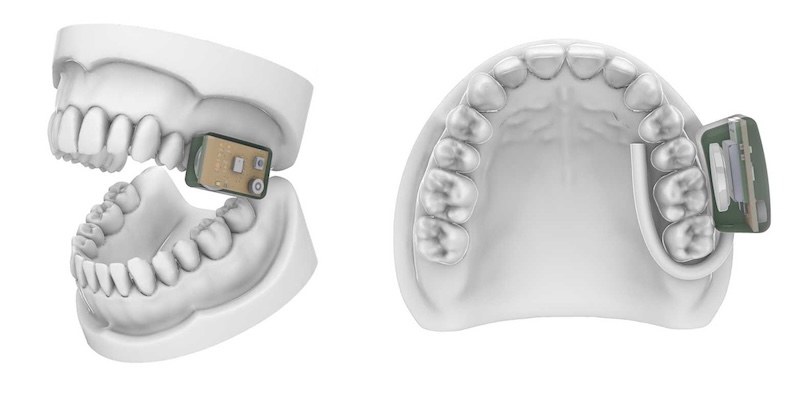
ETH Zurich's InvisiSpeech Reads Silent Tongue Commands With 90% Accuracy

Image source: roboticsandautomationnews.com

Summary: ETH Zurich's InvisiSpeech reads silently formed words from tongue vibrations and hits about 90% accuracy on 50 commands. It's a dental-brace-sized sensor paired with an AI model on your phone. Worth watching for anyone building hands-free or discreet AI interfaces.

Key Points:

  • InvisiSpeech was tested with 15 participants and recognized roughly 90% of 50 predefined English commands, a solid first benchmark for a silent-speech wearable.

  • Hardware is a compact brace-like unit packing a sensor, a battery, and wireless transmitters, yet it stays completely out of sight while worn during everyday activities.

  • Recognition needs only brief per-user calibration, which matters for adoption because long setup routines kill most wearable input devices quickly in practice.

  • Demonstrated tasks include powering gadgets on and off, pulling up facts mid-meeting, and translating foreign-language text via AI glasses in the lab trials.

  • The team wants to move beyond fixed commands toward natural private conversation, but longer sentences and reliable performance while walking remain unsolved problems.

Why it matters: If you're building voice features into AI assistants or smart glasses, InvisiSpeech shows a non-audio input path that could sidestep the privacy and social friction of spoken commands. The current system only handles 50 fixed English phrases, so don't plan product roadmaps around free-form dictation yet. Teams working on accessibility or hands-free workflows should track this closely, since the research pairs a wearable sensor with a phone-side model that's easy to prototype against.

New Tools & Job

  • Techvesta - Techvesta provides strategy, AI agents, automation, and talent to help organizations become AI-native. The company offers discovery and consultation, strategy planning, development and execution, deployment and scaling, and ongoing support for AI integration projects. They work across multiple industries and offer flexible engagement models including fixed-price projects, dedicated teams, and offshore development centers.

  • Roblox Shirt Maker - Roblox Shirt Maker is an independent browser editor for classic Roblox shirts, pants and graphic T-shirts. Start with a clothing template, place artwork you own, and inspect the result on an avatar before exporting a PNG. A useful check is to rotate the preview and compare sleeve edges and side seams: a stripe that looks continuous on the flat template can be offset when the garment wraps around the avatar. The editor lets you adjust the layout before downloading the texture. Manual editing, preview, and PNG export are free. Optional AI image generation requires an account and uses credits; it is not needed for manual editing. Generation does not replace checking placement, transparency or template alignment, and the tool does not publish an item to Roblox on your behalf. Use artwork you have permission to use and follow Roblox requirements separately when uploading. This listing was submitted by the project team. Roblox Shirt Maker is independent and not affiliated with Roblox.

  • TeachAny - TeachAny helps educators draft and adapt classroom materials. Use its quiz and assessment generators to prepare practice questions, or turn a topic into a lesson plan you can review and refine before class.

  • Magi2AI - Magi2AI is an independent web app for short videos that include sound. It runs Sand.ai's MAGI-2 model, but it is not a Sand.ai product. Write a scene, add spoken lines, and download an MP4. Pricing is paid: subscriptions start at $15 a month. There is no free plan.

  • Suzy Says Game - A short first-person horror game hidden inside a cheerful kids' interactive DVD. Obey Suzy, but only when she says "Suzy says". The Suzy Says game is a short first-person horror game by the indie studio MOONBIT. You can play the Suzy Says game here for free. There is no download, no account and no payment on this site. Content note: horror, jump scares, sudden loud sounds and flashing lights. This site is an independent fan page and is not run by MOONBIT.

  • Senior Software Engineer - The MongoDB Atlas team is a diverse group of contributors working together to help our users manage MongoDB at global scale. We are responsible for MongoDB Atlas: our database-as-a-service offering and fastest-growing product, which allows users to deploy fault-tolerant, globally distributed MongoDB

  • Software Engineer, Backend - Who we are About Stripe Stripe, LLC. is a financial infrastructure platform for businesses. Millions of companies - from the world’s largest enterprises to the most ambitious startups - use Stripe to accept payments, grow their revenue, and accelerate new business opportunities. Our mission is to in

  • Software Engineer, Full Stack Atlas - Who we are About Stripe Stripe, LLC. is a financial infrastructure platform for businesses. Millions of companies - from the world’s largest enterprises to the most ambitious startups - use Stripe to accept payments, grow their revenue, and accelerate new business opportunities. Our mission is to in

  • Senior Software Engineer, Backend (Trust Infra) - At Affirm, we exist for the moments that matter—giving people a clear, predictable way to pay over time, with no hidden fees, no surprises, and no tradeoffs on what matters most. The Trust Infra team elevates the security posture of our infrastructure and services by embedding security in everything

  • Staff Forward Deployed AI Engineer - MongoDB is looking for an outstanding person to join our newly created Field Engineering team and take on a key role in our extended R&D organization. Field Engineering is linking the work of teams engaged on application modernization roles with our Product and Engineering teams. Many organizations

QUICK HITS

Read more news here →

THAT'S A WRAP

Partner with Us

Showcase your product to our engaged community of Tech enthusiasts

Our newsletter reaches a diverse audience of tech professionals, investors, engineers, managers, and business leaders worldwide. Hear when ads open.

More from the AI Newsletter

AI Newsletter

Get the next issue

One email a day. Free. Unsubscribe anytime.

How we handle your email: Privacy policy

Comments

Subscribe to join the conversation...

Be the first to comment