Skip to content
ContentBuffer
ContentBuffer
October 28, 2026·~4 min read
ContentBuffer

ContentBuffer

Welcome, Tech Leaders.

Cheap, stiff, lightweight structures just got a lot more practical, and the trick is folding. Researchers built a modular origami system that cuts flat sheets into interlocking blocks, then folds them into a large 3D lattice without welding gear. Why should you care? If you work on hardware prototyping, robotics, or architecture, this is a new way to get strength without bulk. The team says the approach suits disaster relief shelters that ship flat and assemble fast, plus airplane parts, modular robots, sound-dampening panels, and building facades. An automated solver turns your target shape into manufacturable unit cells, and the output feeds straight into a CNC mill. The numbers: simulations show roughly 3.5 times the stiffness of some other structural origami techniques at about two-thirds the material. A 23-foot folded aluminum sculpture went up in days, built by a team with no professional construction background. It now hangs in the atrium of the Boston Public Library for the Fab Lab Conference and Symposium. Next up: larger architectural tests and more complex unit cell geometries. Those are the parts that decide whether this leaves the gallery.

More than five million industrial robots are now operating in factories worldwide, marking a 9% growth from the previous year. China's dominance is evident, with 354,000 new installations, accounting for 59% of the global total. This surge is not just about numbers; it's about the shift in manufacturing power and the economic implications for countries like India and the US, which are seeing rapid adoption. By 2029, the International Federation of Robotics (IFR) forecasts installations to reach 806,000 units, highlighting the ongoing trend of automation in manufacturing. Let's dive deeper…

In today's ContentBuffer update:

  • REDMOD AI detects pancreatic cancer 475 days early

  • KAIST's BeetleBot: LCE Muscles for 45% Contraction

  • Feather Star-Inspired Robot Moves in 3D with Just Two Actuators

  • Meet the Fastest Rubik's Cube-Solving Robot

  • 5 new AI tools & 5 new AI jobs

  • More tech news

Latest Development

Structural Design And Fabrication
MIT Researchers Build Room-Sized Origami Aluminum Sculpture Using Flat Sheets and Folds

Image source: news.mit.edu

Summary: MIT researchers built a room-sized folded aluminum sculpture with a modular origami method that uses no welding. The structures are about 3.5 times stiffer than some alternatives while using about two-thirds the material. Disaster shelters that ship flat are the obvious next target.

Key Points:

  • The method cuts modular blocks from flat sheets with a CNC milling machine, then folds them into a 3D lattice using simple tools and no large-scale welding equipment at all.

  • Simulations indicate structures about 3.5 times stiffer than some other origami-based techniques, while using roughly two-thirds the material needed by conventional alternatives in the comparison.

  • A 23-foot aluminum sculpture was assembled and hung from the atrium ceiling of the Boston Public Library, inaugurated for the annual Fab Lab Conference and Symposium.

  • The entire sculpture was built in a matter of days by a team with no professional construction experience, which says a lot about how forgiving the unit cell design really is.

  • Researchers plan larger architectural tests next, plus unit cells with more complex geometries for greater strength and a user-friendly design interface for non-experts.

Why it matters: If you're prototyping lightweight hardware with CNC mills, this flat-cut-then-fold workflow gives you stiffness without welding rigs or heavy stock. Robotics teams building modular frames and anyone designing ship-flat disaster shelters should look at the unit cell solver, since it turns a target shape into manufacturable parts automatically. The catch is that everything so far is simulation plus one demo sculpture, so treat the 3.5x stiffness figure as a lead, not a spec.

Industrial-automation
Worldwide Industrial Robots Surge to Over 5 Million Units

Image source: robohub.org

Summary: China installed 354,000 industrial robots in 2025, leading the global market. The US is now the second-largest, with 38,500 installations. This growth is reshaping manufacturing and economic dynamics.

Key Points:

  • More than 5 million industrial robots are now operating in factories worldwide, marking a 9% growth from the previous year.

  • China installed 354,000 industrial robots in 2025, accounting for 59% of the global total.

  • The US overtook Japan to become the world's second-largest market, with almost 38,500 installations.

  • India installed nearly 10,500 robots, a 15% increase from the previous year.

  • The IFR forecasts installations to reach 806,000 units by 2029, indicating sustained growth in the robotics market.

Why it matters: If you're in manufacturing, the shift towards automation is undeniable. China's dominance and the rapid adoption in emerging markets like India and the US are reshaping global supply chains. Toyota's estimate of needing 400,000 robots for factory modernization underscores the scale of this transition. This trend impacts not just the manufacturing sector but also the broader economy, influencing job markets and technological innovation.

Medical-imaging
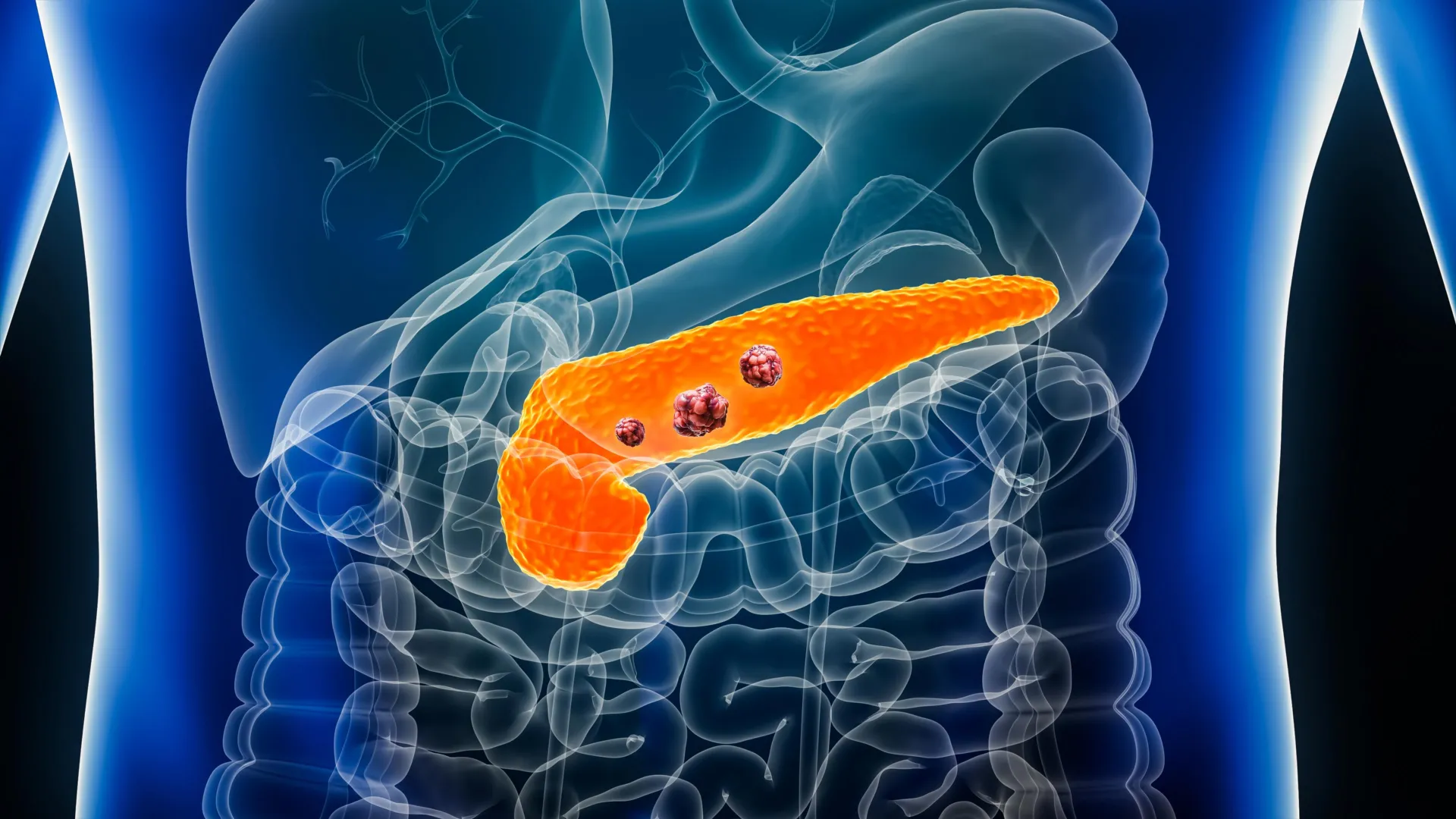
REDMOD Detects Pancreatic Cancer 475 Days Early

Image source: www.sciencedaily.com

Summary: REDMOD, an AI system, detects pancreatic cancer 475 days before diagnosis, potentially improving treatment outcomes. Why you should care: Early detection could save lives.

Key Points:

  • REDMOD detected pancreatic cancer 475 days before diagnosis, nearly doubling radiologist sensitivity (73% vs 39%).

  • The system was tested on 219 patients' CT scans, with 87 scanned 3-12 months before diagnosis, 76 scanned 12-24 months before, and 56 scanned more than 24 months before.

  • REDMOD correctly classified 81% of scans as cancer-free in an independent group of 539 patients from several hospitals.

  • The system also performed well on the NIH-PCT dataset, correctly identifying 87.5% of scans as free of pancreatic cancer.

  • Prospective testing is needed among high-risk populations to determine the system's effectiveness in clinical practice.

Why it matters: If you're a radiologist or work in medical imaging, REDMOD's ability to detect pancreatic cancer 475 days before diagnosis could change how you approach early screening. This could dramatically improve treatment outcomes for patients, especially those with pancreatic ductal adenocarcinoma.

Soft Robotics
KAIST Unveils BeetleBot With 45% Contractile LCE Muscles

Image source: assets.newatlas.com

Summary: KAIST's BeetleBot uses LCE muscles for 45% contraction, controlled by a finger sensor. It's a game-changer for precise robotic tasks.

Key Points:

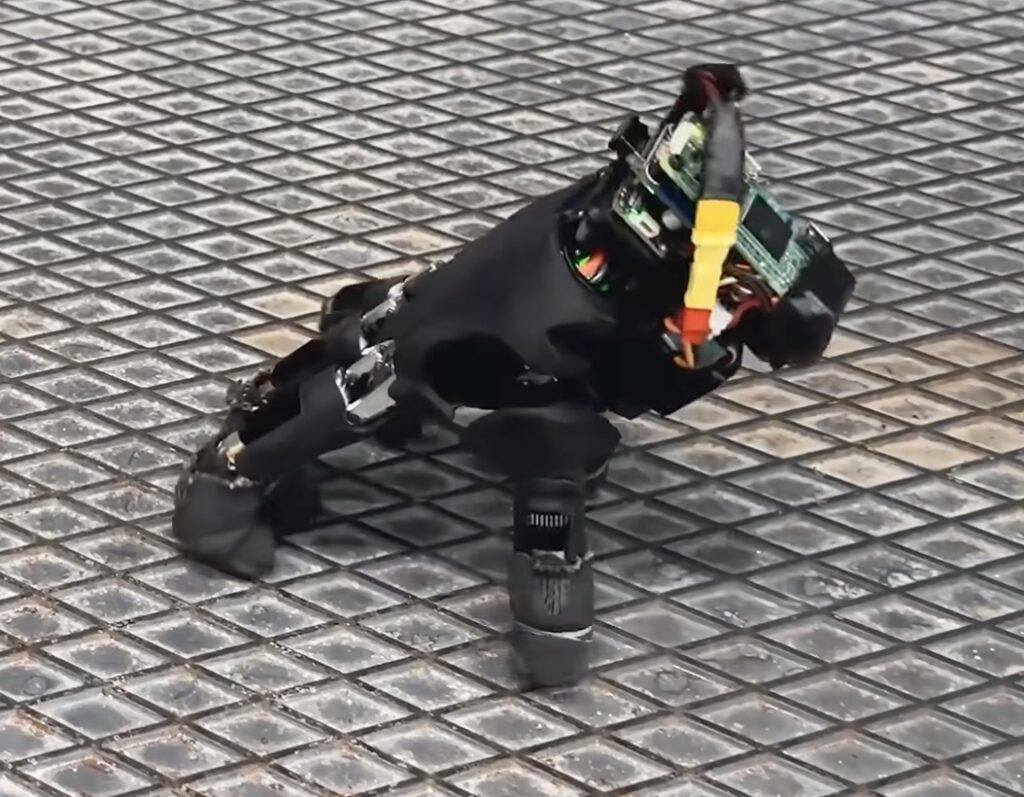
  • BeetleBot's LCE muscles contract 45% when heated to 110°C (230°F), enabling precise movement.

  • A flexible sensor patch worn on the finger controls BeetleBot's movements with electrical resistance changes.

  • The robot can execute four commands: move forward, turn left, turn right, and grip an object.

  • BeetleBot's gripper uses LCE muscles and a pressure sensor to determine applied pressure accurately.

  • In lab tests, BeetleBot successfully navigated turns, reached objects, gripped them, and transported them.

Why it matters: If you're working on precision robotic tasks, BeetleBot's LCE muscles and finger sensor control offer a new level of human-guided interaction. The robot's bidirectional feedback system enhances its adaptability in various environments, making it a valuable tool for research and development.

Biomimetics
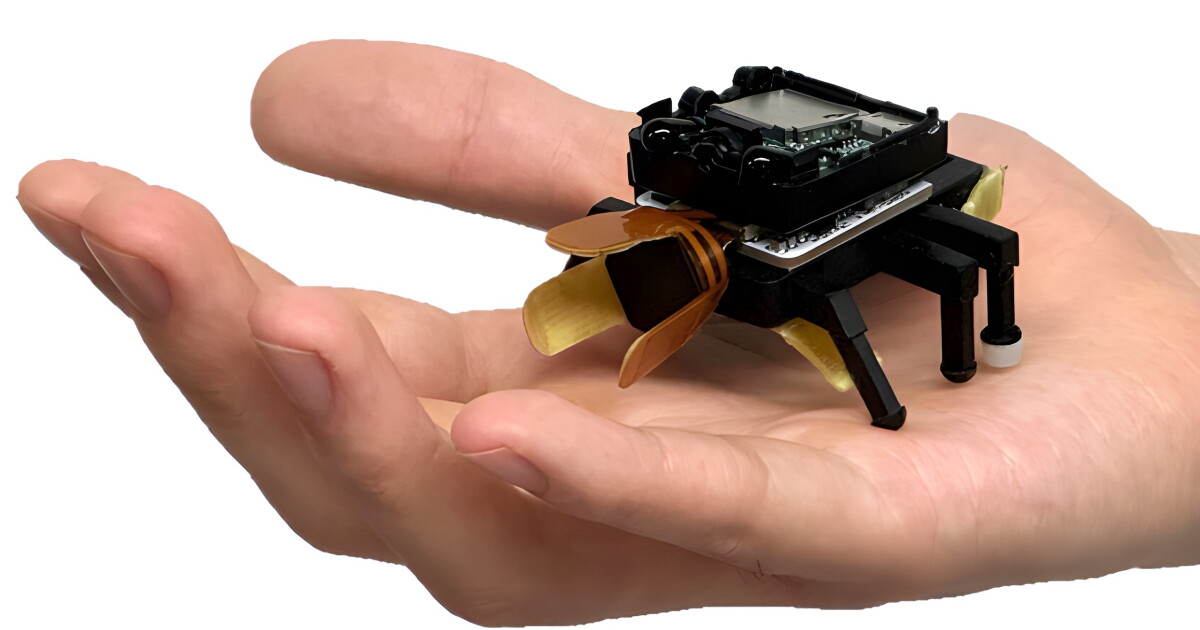
Feather Star-Inspired Robot Uses Two Actuators for 3D Movement

Image source: assets.newatlas.com

Summary: Researchers at North Carolina State University built a feather star-inspired robot that moves in 3D with just two actuators. This could make underwater exploration and robotics more efficient and cost-effective.

Key Points:

  • The robot mimics the feather star, a marine invertebrate, with multiple flexible, feather-like limbs for movement.

  • Feather star-inspired robot uses only two actuators to maneuver in three dimensions, a feat typically requiring six.

  • The robot can move in three different modes: jellyfish, fish, and rotor modes, showcasing its versatility.

  • In jellyfish mode, the robot rises and descends by contracting and relaxing its body, demonstrating unique mobility.

  • The robot's design allows it to swim, hover, and change orientation, making it ideal for underwater exploration.

Why it matters: If you're working on underwater robotics or exploration, the feather star-inspired robot's design could reduce complexity and cost. With only two actuators, it showcases the potential of biomimetics in creating more efficient and versatile aquatic robots.

Robotics-competition
Robot Solves Rubik's Cube in 0.103 Seconds

Image source: spectrum.ieee.org

Summary: Purdue ECE students set a Guinness World Record with a robot solving Rubik's Cubes in 0.103 seconds. This showcases the rapid advancements in robotic dexterity and speed.

Key Points:

  • Purdue ECE students set a Guinness World Record with a robot solving Rubik's Cubes in 0.103 seconds.

  • ETH Zurich's RSL presented a robot solving a Rubik's Cube using only its feet, demonstrating advanced dexterity.

  • The AthenaZero hand, with two three-fingered robot hands, can close in about 80 milliseconds and lift up to 20 kg.

  • Generative Bionics plans to build Europe's largest Physical AI Data Factory with AMD as its AI infrastructure partner.

  • NASA is establishing a human presence on the Moon using robotic rovers and lunar terrain vehicles to investigate the South Pole region.

Why it matters: The Purdue ECE team's Guinness World Record showcases the rapid advancements in robotic dexterity and speed. This achievement highlights the potential for robots to excel in tasks requiring quick, precise movements, such as assembly lines and surgical operations. The team's robot, with its highly accurate sensors and powerful motors, marks a significant step forward in robotic engineering.

New Tools & Job

  • VideoAny - VideoAny.ai offers freemium AI video and image tools in one browser workspace. Create and edit visuals, download results, and upgrade only if you need more. Works in the browser. No install. Product page: https://videoany.ai/image-to-video

  • Bulin 47 AI Video Generator - Bulin 47 AI Video Generator is an independent photo-to-video remix studio. Upload one clear portrait; Seedance 2.5 replaces the lead performer while keeping the street and crowd reference. Output is a silent ~15-second 480p clip — add your own music in TikTok or CapCut. Free to preview photos and guides; generation uses credit packs. Not affiliated with Bulin 47, Kevin Wai, or any label.

  • Crazy Frog AI Video Generator - Crazy Frog AI Video Generator is an independent photo-to-video meme studio. Upload one clear rider photo; Seedance builds a comedic invisible-motorcycle chase with a fictional helmeted officer. Choose coastal escape, neon city, or desert run; output about 15 seconds with original energetic instrumental audio at 480p or 720p (9:16 or 16:9). Generation uses credit packs ($6.90 / $29.90 / $99.90) — no subscription and no free video generation. Not affiliated with or endorsed by Crazy Frog or its rights holders.

  • Dime Dime Baby AI Generator - Dime Dime Baby AI Generator turns one portrait (or two for a duet) into a party-inspired photo-to-video meme. Pick a version — classic party, friends dancing, garden party or character remix — and generate a 9-second 480p clip with AI-generated instrumental and party ambience. No app needed; photos stay local until you generate. Paid credit packs start at $6.90. Independent tool, not affiliated with the original creators.

  • WithYouAgain - WithYouAgain creates cinematic AI memorial videos for pets who have passed away. Upload 1–3 photos, describe the little details that made your pet unique, preview the result twice for free, and create a 20-second Día de Muertos journey home through marigolds and an ofrenda, ending with a personalized memorial card.

  • Senior Software Engineer, Backend (AI Platform) - At Affirm, we exist for the moments that matter—giving people a clear, predictable way to pay over time, with no hidden fees, no surprises, and no tradeoffs on what matters most. Affirm's engineering team is building a large-scale, fault-tolerant, and global infrastructure that is shared across mult

  • Data Engineer - ABOUT ELEVENLABS ElevenLabs is an AI research and product company transforming how we interact with technology. We launched in January 2023 with the first human-like AI voice model. Today, we serve millions of users and thousands of businesses - from fast-growing startups to large enterprises like D

  • Specialist Seller - Enterprise Select - AI - Who we are Samsara (NYSE: IOT) is the pioneer of the Connected Operations™ Cloud, which is a platform that enables organizations that depend on physical operations to harness Internet of Things (IoT) data to develop actionable insights and improve their operations. At Samsara, we are helping improve

  • Forward Deployed Engineer (FDE) - AI Infra - SF - About the team OpenAI’s Forward Deployed Engineering team partners with customers to turn research breakthroughs into production systems. We operate at the intersection of customer delivery and core platform development. About the role Forward Deployed Engineers lead complex deployments of frontier

  • Model Operations Lead, AI Gateway - About Us At Cloudflare, we are on a mission to help build a better Internet. Today the company runs one of the world’s largest networks that powers millions of websites and other Internet properties for customers ranging from individual bloggers to SMBs to Fortune 500 companies. Cloudflare protects

QUICK HITS

Read more news here →

THAT'S A WRAP

Partner with Us

Showcase your product to our engaged community of Tech enthusiasts

Our newsletter reaches a diverse audience of tech professionals, investors, engineers, managers, and business leaders worldwide. Get in touch today.

Comments

Subscribe to join the conversation...

Be the first to comment

Want this in your inbox?

Get the daily edition delivered free every morning.

Join 3,568 builders reading daily.

Also get

Latest Issues

View Archive →
OpenAI released solutions to three long-stalled research problems, including a result that could reject the Exponential Time Hypothesis. If the claims hold, a decade of computer science papers built on that assumption need revisiting.
Daily Edition#330

OpenAI released solutions to three long-stalled research problems, including a result that could reject the Exponential Time Hypothesis. If the claims hold, a decade of computer science papers built on that assumption need revisiting.

OpenAI released dots, a proactive personal assistant, to ChatGPT Pro subscribers starting at $100 a month. It connects to your calendar, email, and tools, and it flags conflicts and deadlines without being asked. Useful, but still early and a bit pushy.

October 28, 2026
Researchers developed a modular origami construction method that makes structures about 3.5 times stiffer than some alternatives while using less material. A 23-foot aluminum sculpture hangs in the Boston Public Library as proof. Disaster shelters that ship flat could be next.
Daily Edition#7

Researchers developed a modular origami construction method that makes structures about 3.5 times stiffer than some alternatives while using less material. A 23-foot aluminum sculpture hangs in the Boston Public Library as proof. Disaster shelters that ship flat could be next.

The global industrial robot market saw a 11% increase in installations in 2025, with China leading the charge at 59% of the total. This growth is reshaping the manufacturing landscape, with India and the US also seeing significant upticks.

October 28, 2026
Bedrock Robotics raised $600M at a $4.1B valuation, led by CapitalG and Emergence Capital. Its retrofit self-driving kit already runs excavators at three real job sites in Nevada and Texas. For anyone tracking robotics or construction tech, this is the first proof that autonomy is leaving the demo stage.
Daily Edition#329

Bedrock Robotics raised $600M at a $4.1B valuation, led by CapitalG and Emergence Capital. Its retrofit self-driving kit already runs excavators at three real job sites in Nevada and Texas. For anyone tracking robotics or construction tech, this is the first proof that autonomy is leaving the demo stage.

Anthropic says over half of its 11,900 customers spending $100K or more now use Claude and a first-party app together. Net revenue retention hit about 900%. If you build on Claude, expect pricing and product bundling to tighten around that ecosystem.

October 27, 2026