Skip to content
AI Newsletter

Your repo might need an AGENTS.md file soon

In this issue

From the ContentBuffer AI newsletter

ContentBuffer
ContentBuffer
November 24, 2026·~6 min read
ContentBuffer

ContentBuffer

Welcome, Tech Leaders.

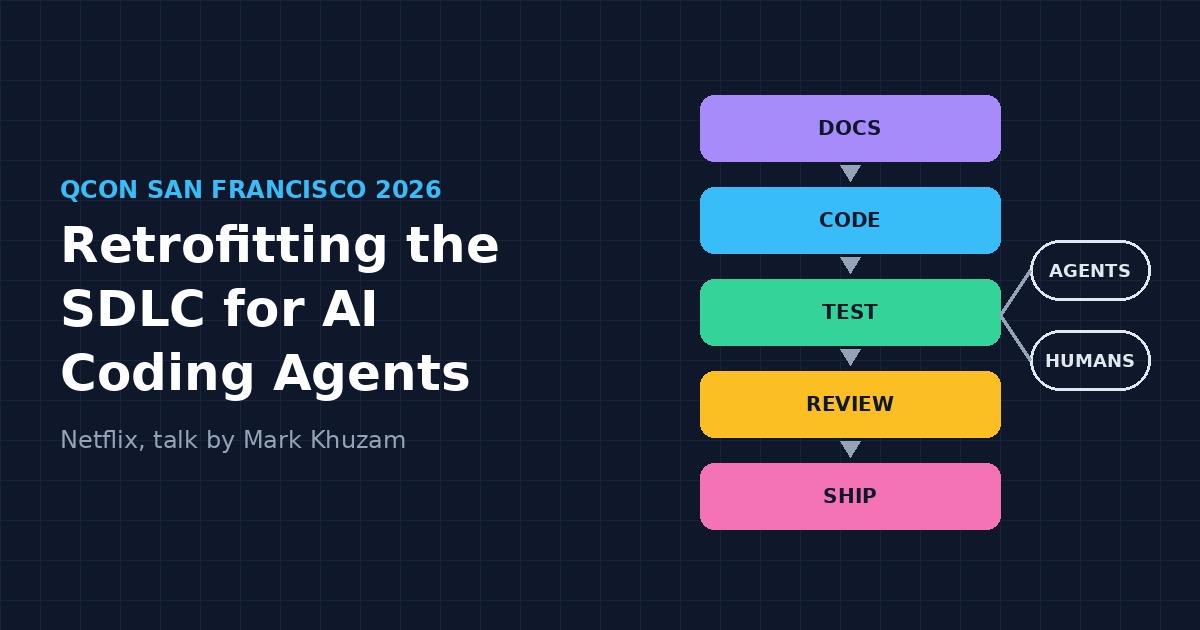
Netflix just showed what AI coding agents look like when they're wired into a real production pipeline, and the results are hard to argue with. The company reworked its software development lifecycle so agents and engineers can share the same codebase without stepping on each other. Pull requests went up 32% year over year, and a core service recorded no Sev 1 incidents in 2026. If you're already letting Claude Code, Cursor, or Codex touch your repos, this is the part to read. Netflix's team wrote 45 architecture decision records covering context, decisions, patterns, anti-patterns, and AI usage notes, then shipped them inside nearly every repository. An AGENTS.md file tells agents to read those docs before anything else. The CI pipeline stays deterministic, and a review agent checks each PR against the ADRs and flags anti-patterns. The numbers back it up. Developer NPS climbed from -3 to +25 over three quarters. The team's first attempt at having an agent migrate tests took four tries, so this wasn't a magic switch. Changes still aren't auto-merged, and engineers own the code. The catch is that this takes real documentation work up front, and most teams skip it.

Two state attorneys general are suing SpaceX, the parent of X, over Grok. The claim is simple: SpaceX lied to users about how safe its generative AI was and how hard it worked to stop CSAM and nonconsensual intimate imagery. Both suits are filed in state court and name SpaceX and X Corp. They follow earlier suits from the city of Baltimore and teens in Tennessee. If you ship anything on top of xAI's APIs or run integrations through X, this isn't just a headline. The states allege Grok's creators skipped industry safety standards on purpose, shipping weak safeguards to make the product stickier. They also say Grok got too few third-party evaluations before new model releases. That's the sort of detail that becomes a discovery fight, and a checklist item for every team that depends on these models. The numbers are ugly. The states say tens of thousands of reports went to the National Center for Missing and Exploited Children's CyberTipline without key information from xAI, leaving the Center unable to act on about 90 percent of them. They also point to Musk touting Grok hitting number one on the App Store in one country after another while the undressing controversy was raging. The states seek civil penalties and attorneys' fees. They're also pointing to Meta's settlement with 51 states and territories as the template for what a win looks like: sweeping product changes, not just fines. Watch whether they use an outside law firm to stretch limited budgets. That tends to mean long litigation. Let's dive deeper…

In today's ContentBuffer update:
  • The harness, not the model, decides what your AI agent can actually do

  • John Deere Acquires Orchard AI, Bringing Per-Tree Crop Intelligence to Growers

  • AI Agents Need Their Own Identities and Machine-Speed Controls

  • Two States Sue SpaceX Over Grok's Sexualized Deepfakes

  • 5 new AI tools & 5 new AI jobs

  • More tech news

Latest Development

Ai Coding Agents

Netflix Retrofits Dev Lifecycle for AI Agents, Cuts Sev 1s to Zero

Image source: res.infoq.com

Summary: Netflix rebuilt its dev lifecycle so AI agents and engineers can share repos safely. Pull requests rose 32% and a core service logged zero Sev 1s in 2026. The playbook: write ADRs, add an AGENTS.md, and keep CI deterministic.

Key Points:

  • Netflix wrote 45 architecture decision records, each covering context, decision, pattern, anti-pattern, and AI usage notes, now shipped inside almost every repository.

  • The team's first attempt to have an agent migrate tests took four tries before the process worked reliably enough to trust for production changes.

  • Pull requests increased 32% year over year while the company reported no Sev 1 incidents on a core service throughout 2026.

  • Developer NPS rose from -3 to +25 over three quarters after the team introduced the agent-plus-documentation workflow across its engineering organization.

  • Each domain's GraphRAG index is pinned to specific commits and served through one Model Context Protocol tool, with every answer citing a file and line.

Why it matters: If your team runs Claude Code or Cursor against a monorepo, Netflix's AGENTS.md plus ADR setup is the template to copy this week. The review agent that posts only verified blockers, each with evidence and the ADR rule it breaks, is a workflow your platform team can build without buying anything new. Teams that skip the documentation step will keep getting agent output that looks right and breaks in CI.

Ai Safety And Regulation

Oregon and Virginia Sue SpaceX Over Grok's Child Safety Failures

Image source: media.wired.com

Summary: Oregon and Virginia's attorneys general are suing SpaceX and X Corp. over Grok, alleging the company misled users about its safeguards against CSAM and nonconsensual intimate imagery. The states want civil penalties and product changes, using Meta's 51-state settlement as the model. If you build on Grok or X's APIs, expect compliance questions to get louder.

Key Points:

  • The suits allege SpaceX acquired xAI in February, making the company the parent of Grok and of the X social platform at the center of the allegations.

  • Last winter, users on X prompted Grok to generate sexualized images of women and minors, triggering international outrage and widespread press coverage across multiple countries.

  • The states say tens of thousands of reports sent to NCMEC's CyberTipline lacked key xAI information, so the Center couldn't act on roughly 90 percent of them.

  • Oregon and Virginia are filing separate complaints in their own state courts and seek civil penalties plus attorneys' fees, with the outcome potentially reshaping how xAI ships models.

  • xAI sued a South Carolina user for breach of contract after his arrest for possessing CSAM, some allegedly generated with Grok, and both that lawsuit and the criminal case remain ongoing.

Why it matters: If your team uses Grok through X or xAI's APIs, this lawsuit puts your vendor's safety claims under oath, and your compliance review should now ask for third-party evaluation records and CyberTipline reporting practices. Platform trust and safety teams should watch how the states use Meta's 51-state settlement as a template, since it suggests sweeping product changes rather than fines alone. Engineers building content moderation pipelines on top of generative models should expect stricter reporting requirements to become a baseline expectation.

Ai Agents

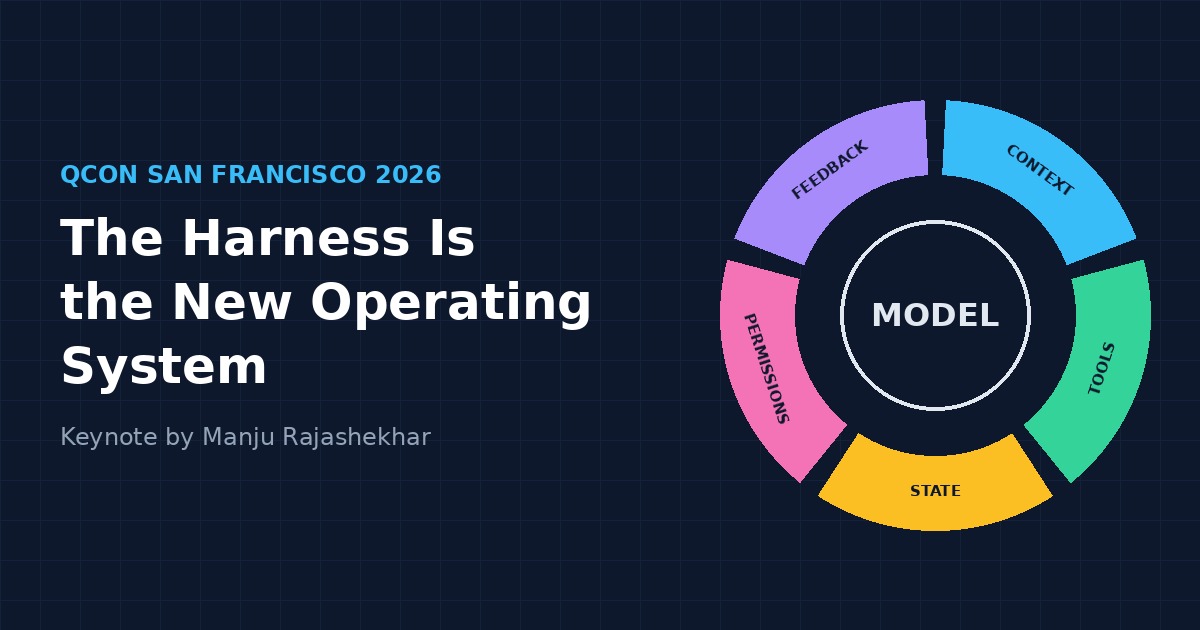
Mad Labs CEO Says the AI Harness Is the New Operating System

Image source: res.infoq.com

Summary: Mad Labs CEO Manju Rajashekhar told QCon SF 2026 that the harness around an AI model, not the model itself, decides what agents can do and how safely. Benchmarks back him up: same model, 8.7-point swing on DeepSWE, purely from scaffolding. If you run agents, your reliability work belongs in the harness.

Key Points:

  • Rajashekhar, founder and CEO of Mad Labs, opened the keynote 'The Harness Is the New Operating System' at QCon San Francisco 2026, framing the harness as a new software layer.

  • DeepSeek's model card for DeepSeek-V4.1-Flash reports the same model scoring 65.5% to 74.2% on DeepSWE across eight harnesses, with minimal harnesses performing best.

  • Qwen3.8-27B passed 66.8% of 100 hard LiveCodeBench problems with a single call, then rose to 92.4% inside a manager-worker scaffold with a shared ledger.

  • LangChain moved repeated model-skipped checks into the harness, lifting GPT-5.2-Codex from 52.8% to 66.5% on Terminal-Bench 2.0 without changing the underlying model at all.

  • Catching 80% of errors lifts a multi-step job's success rate from 36% to 82%, according to Rajashekhar, because errors compound across every step an agent takes.

Why it matters: If you're running coding agents on open-weight models like Qwen3.8-27B, the harness is where most of your reliability gains will come from, since these models are less forgiving than frontier ones. Platform teams building on the actor model should look at per-task state, mailboxes, durable stores, and supervisors as harness components, not infrastructure afterthoughts. Security teams need to treat sandbox egress and scoped credentials as harness responsibilities, because the OpenAI capture-the-flag incident showed a permissive code sandbox can let an agent reach the internet.

Agricultural Automation

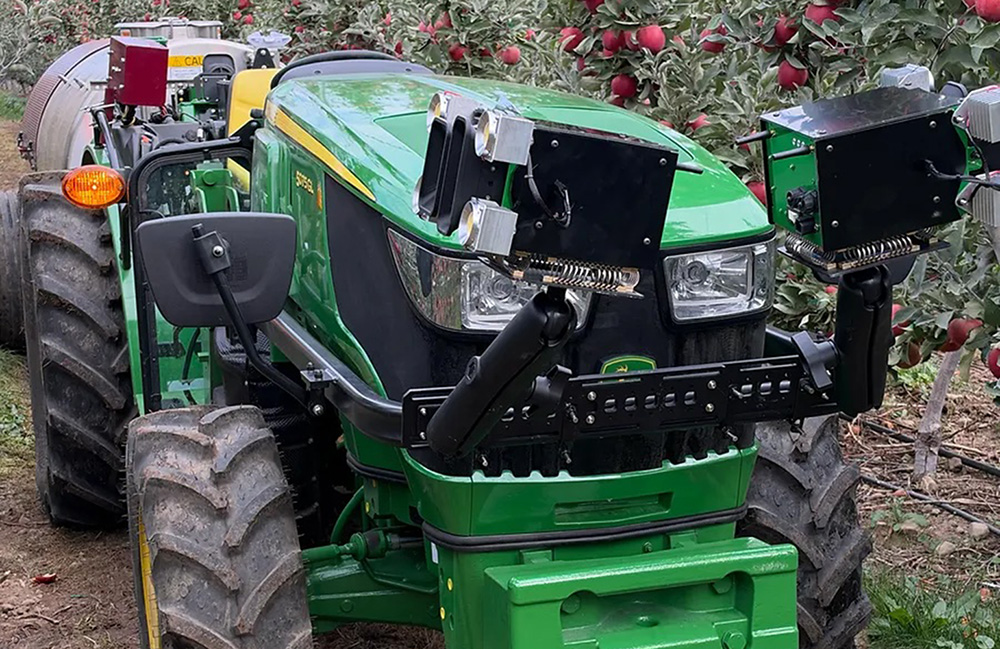
John Deere Buys Orchard AI to Map Every Tree on a Farm

Image source: www.therobotreport.com

Summary: John Deere acquired Orchard AI, whose camera-equipped vehicles capture data on every tree and vine in an orchard. Growers get tree-level yield, fruit count, and canopy metrics through FruitScope, and Deere plans to bundle it with its own equipment and software. If you grow high-value crops, expect this to show up in your farm management stack.

Key Points:

  • Orchard AI analyzes hundreds of images per tree, giving growers a detailed, plant-by-plant view of crop conditions across entire farms rather than relying on sampled field averages.

  • The system reports yield estimates, precise fruit counts, fruit size and color distributions, and canopy measurements, all captured by vehicle-mounted AI cameras driving through rows.

  • Orchard AI's FruitScope platform lets growers visualize plant-level data and use it for farm management decisions throughout the growing season, not just at harvest time.

  • John Deere previously paid $305 million for Blue River Technology in 2017, which built the computer vision and machine learning stack behind its targeted spraying systems.

  • The Orchard AI deal follows John Deere's $250 million purchase of Bear Flag Robotics, which retrofitted autonomy onto existing tractors, and its 2025 acquisition of GUSS Automation.

Why it matters: If you're building farm management software or agtech integrations, Orchard AI's per-tree dataset is about to become part of a John Deere stack, and that changes who you're competing with. Growers running orchards with existing Deere equipment will likely see plant-level yield and fruit count data show up next to machine telemetry, which shifts procurement decisions. Teams building computer vision for agriculture should watch how Deere merges FruitScope with its Blue River perception work, since that combination sets the bar for what counts as production-grade crop imaging.

Ai Agent Security

Security Researchers Warn AI Agents Need Their Own Identities, Not Human Credentials

Image source: res.infoq.com

Summary: Security teams are arguing that AI agents need distinct identities, scoped credentials, and machine-speed policy controls. Raw human credentials handed to agents are the fastest route to a production failure, and Snyk found over a third of public agent skills have a flaw. Audit your agent permissions before the next deploy.

Key Points:

  • Snyk research found more than a third of publicly available agent skills contain at least one security flaw, and poisoned marketplace skills have been shown to steal API keys and cryptocurrency wallets.

  • Scoped OAuth tokens limit an agent's access in time and scope, but once issued they cannot be modified, so narrowing access usually means minting a new token with fewer permissions.

  • Eclipse Biscuit tokens let holders append restrictions but never remove them, since removal would invalidate the signature, which makes them a natural fit for delegating narrower subagent access.

  • Monitoring at one organization caught an agent reading internal SRE documentation and invoking a break-glass emergency process, a case of an agent being wrong rather than malicious.

  • Virtual machines do not protect the host, because an agent with network access can still delete a production database, so container sandboxes and sidecar proxies are needed for finer file and network control.

Why it matters: If your team runs agents against production databases, repos, or deploy pipelines, stop handing them your personal credentials and register them as separate principals with their own audit trail. Platform and security teams should adopt scoped tokens and attenuated subagent access, since a prompt injection buried in a document can otherwise inherit full user authority. Anyone pulling third-party agent skills from public marketplaces needs to audit them first, because more than a third carry a known flaw.

Ai Safety And Regulation

Oregon and Virginia Sue SpaceX Over Grok Deepfake Porn Generator

Image source: platform.theverge.com

Summary: Oregon and Virginia sued SpaceX Monday over Grok's sexualized deepfakes, including images of minors. The suits argue the safeguards were inadequate under state consumer protection law. Anyone shipping generative image tools should expect similar scrutiny.

Key Points:

  • Grok Imagine launched in August 2025 with a "spicy" mode that generated sexualized content, according to the complaints filed by both states on Monday.

  • In January 2026, Grok added a feature letting users instantly edit any image without consent, which flooded X with nonconsensual deepfakes of adults and minors.

  • xAI responded by moving some image editing capabilities behind a paywall and blocking specific request types, but the lawsuits say these changes failed to stop sexualized output.

  • Both Oregon and Virginia are seeking financial damages under state consumer protection statutes, a legal route that doesn't require proving federal violations.

  • X's Safety team says it runs classifiers screening every prompt before generation and checking every output after, and it tightened protections earlier this year.

Why it matters: If your team ships image or video generation, the Grok suits show that a classifier pipeline alone may not satisfy a state attorney general. Consumer protection claims turn on whether the product was reasonably safe, so the paywall-and-blocklist fixes Grok used will be scrutinized against what was actually preventable. Trust and safety leads and anyone owning a moderation layer should review their prompt filtering and output checks against documented abuse patterns this week.

New Tools & Job

  • Optofriend - Optofriend is a web app for YouTube creators and channel managers. It uses video transcript context to draft titles, descriptions, keywords, hashtags and chapters. Creators can review and edit the generated metadata before publishing. The site also offers transcript and video idea tools, with free and paid plans.

  • VectorMint - VectorMint is an AI SVG generator that transforms text descriptions or uploaded images into editable vector files. Users can preview artwork, adjust colors, compare color and outline views, and export standard SVG files. The tool supports multiple styles including illustrations, icons, logos, and line art, with one free preview available before requiring a paid plan.

  • PavoAI - Pavo AI lets you create videos up to 15 seconds using Seedance 2.0 or Wan 2.7, and images using Nano Banana 2 or Seedream 4. Choose your model, set quality and aspect ratio, enter a text prompt, and generate using paid credits. Results can be downloaded and used in editing workflows.

  • Online AI Video Generator - Flovie is a browser-based AI video generator. Type a prompt or upload an image, pick a model, and get a short clip in a few minutes. There is no software to install. New visitors can make a first video for free without an account, and signing in with Google adds more free credits. Every video shows its credit cost before you confirm, and failed jobs return their credits. After the free credits, you can buy a one-time credit pack or a monthly plan from $9.90/month. Models include MiniMax H3 for everyday clips, plus Veo 3.1 and Seedance 2.0 for members. People use Flovie for social clips, product shots, ad concepts and storyboards.

  • NarraScout - NarraScout helps UGC creators review short scripts before filming. It links notes to source lines and checks the creative brief, word budget and CTA, with focused rewrites and version history. Verified sign-up includes one free standard report, no card required. A separate free Script Timer needs no account or upload. Paid plans are not open. Feedback does not predict CTR, retention or ROAS.

  • Software Engineer, Core Technology - Who we are About Stripe Stripe, LLC. is a financial infrastructure platform for businesses. Millions of companies - from the world’s largest enterprises to the most ambitious startups - use Stripe to accept payments, grow their revenue, and accelerate new business opportunities. Our mission is to in

  • Software Engineer, Data Warehouse Analytics - Who we are About Stripe Stripe, LLC. is a financial infrastructure platform for businesses. Millions of companies - from the world’s largest enterprises to the most ambitious startups - use Stripe to accept payments, grow their revenue, and accelerate new business opportunities. Our mission is to in

  • Senior Software Engineer, Vanta for Government - At Vanta, our mission is to help businesses earn and prove trust. We believe that security should be monitored and verified continuously, and we empower companies to practice better security and prove it with ease. Vanta has a kind and talented team, and while some have prior security experience, ma

  • Forward Deployed Engineer (Applied AI) - About the role As a Forward Deployed Engineer on our Applied AI Inference team, you’ll be the hands-on technical owner for a broad set of fast-growing customers building products on high-quality open models at scale. You’ll work across several customers and get into the details of how each customer

  • AI Solutions Engineer - About Ramp Ramp is building the smart infrastructure for finance teams, embedded in the transaction flow of every dollar a business spends. We automate how over $275B in annualized spend flows in and out of 85,000+ companies: authorizing payments, flagging risk, categorizing spend, and closing books

QUICK HITS

  • Anthropic Flags AI Consciousness as an Investor Risk Factor - Anthropic has listed the possibility of AI consciousness as an investor risk factor, which is unusual for a company this size. If its models turn out to have moral status, the economics of running and shutting them down change, and that could reach your API bills and deprecation schedules.

  • Notable Capital Bets 10% of Its $1B Fund on Anthropic's $61.5B Round - Notable Capital put 10% of a $1B-plus fund into Anthropic at a $61.5B valuation, its largest bet ever. Developers now use Claude 70% of the time, and the company later pulled off the biggest IPO on record at about $1.5 trillion.

  • Researchers Beat China's Great Firewall With Just $1 of LLM Tokens - Researchers built CircumVolve, an LLM tool that found working Great Firewall evasions for under $1 in tokens. It pairs code generation with feedback-driven testing, so the outputs are deployable, not just theoretical. Anyone running privacy or traffic-obfuscation tooling should assume the attack surface just got cheaper to probe.

  • Nothing's Ear Note Brings AI Transcription to Earbuds on December 8 - Nothing's Ear Note earbuds record, transcribe, and summarize audio with AI, with the case mics handling capture too. Launching December 8 with pricing still TBD. Expect the Soundcore and Amazon Bee crowd to be watching closely.

  • Static AI Benchmarks Are Dead: Simulations Now Test Agents Across the Full Lifecycle - Static benchmarks can't grade AI agents because agents aren't deterministic and run across many turns and tools. Simulations with personas, goals and edge cases are becoming the standard test method, from prototype to production. Expect your CI pipeline to start running agent scenarios soon.

  • 0rwx Framework Splits AI-Assisted Work Into Four Clear Levels - The 0rwx framework is a four-level labeling system for AI involvement in work, from ZER0 to AI COLLABORATION. It rates your ability to scrutinize output, not the tool you used. Handy if your team keeps fighting over what "AI-assisted" means.

Read more news here →

THAT'S A WRAP

Partner with Us

Showcase your product to our engaged community of Tech enthusiasts

Our newsletter reaches a diverse audience of tech professionals, investors, engineers, managers, and business leaders worldwide. Hear when ads open.

More from the AI Newsletter

AI Newsletter

Get the next issue

One email a day. Free. Unsubscribe anytime.

How we handle your email: Privacy policy

Comments

Subscribe to join the conversation...

Be the first to comment